
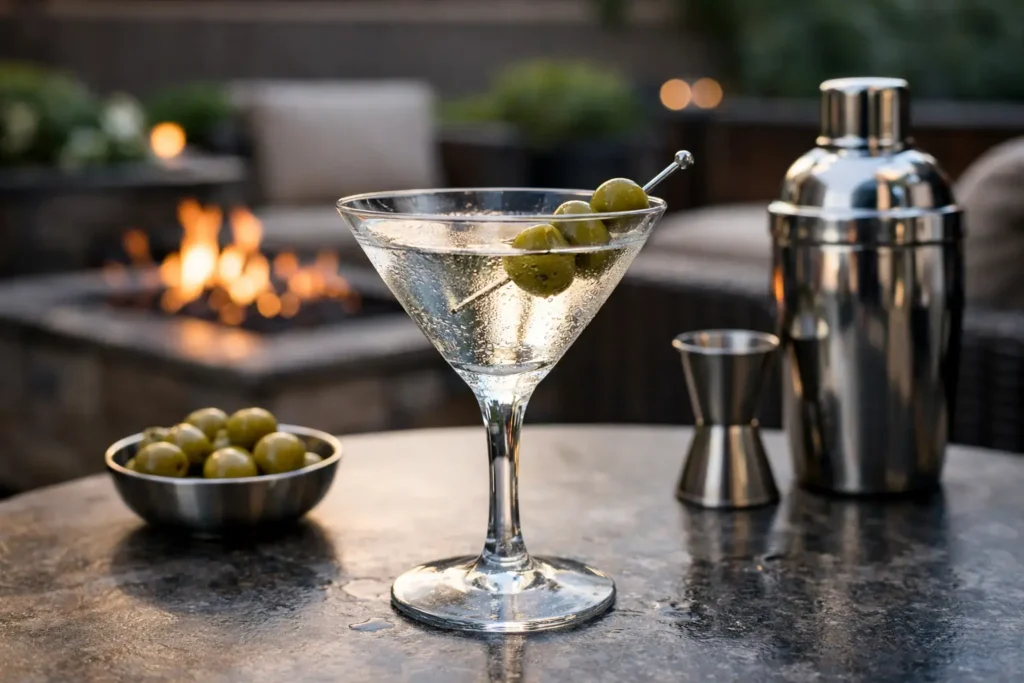
A martini arrives with very little room to hide. There is no fruit juice, elaborate syrup, or cloud of crushed ice to soften a heavy hand. What makes a great martini is precision: beautiful spirit, fresh vermouth, exact dilution, piercing cold, and a garnish that completes the drink rather than competing with it.
That simplicity is the seduction. A properly made martini feels composed from the first look – clear, cold, and poised in the glass – to its long, aromatic finish. It can open a client dinner with quiet confidence, sharpen the mood of an after-work gathering, or make a date night feel like an occasion before the first plate reaches the table.
What Makes a Great Martini?
The answer begins with balance, not rigidity. Martini drinkers are famously particular, and their preferences deserve respect. One guest may want a bone-dry gin martini with a twist; another may prefer vodka, a touch more vermouth, and olives. Neither order is inherently more sophisticated. The great martini is the one whose ingredients and technique are deliberately chosen to deliver the guest’s preferred profile.
Still, preference is not an excuse for carelessness. Even a very dry martini needs enough structure to feel complete. A fine gin deserves vermouth that brings floral, herbal, or lightly bitter notes into focus. A vodka martini needs careful dilution and thoughtful garnish, because its clean profile makes every detail more visible. The objective is a drink that tastes intentional, not merely strong.
Start With a Spirit Worth Serving Cold
Gin is the classic foundation, bringing juniper and botanical character that can range from bright citrus to peppery spice, violet, or savory herbs. A London dry style often creates the familiar crisp, bracing martini experience. More contemporary gins can bring unexpected texture and perfume, but they ask the bartender to consider whether the garnish and vermouth will flatter those particular botanicals.
Vodka offers a different kind of luxury: a silky, restrained canvas with a clean finish. It is often chosen by guests who want a sleek, direct cocktail rather than a botanical one. The best vodka martinis are not simply icy vodka in a stemmed glass. They still require proportion, temperature, and dilution to gain softness and shape.
Quality matters, but the most expensive bottle is not automatically the right one. A great martini begins with a spirit whose personality fits the desired moment. Gin can be lively and aromatic before dinner; vodka can feel polished and effortless late into the evening. Both can be exceptional when treated with care.
Vermouth Is Not an Afterthought
Vermouth is where many martinis lose their way. It is a fortified, aromatized wine, and like any wine, it changes after opening. A dusty bottle left at room temperature can make even premium gin taste flat, stale, or oddly sweet. Fresh vermouth, stored properly under refrigeration, brings lift and dimension.
The phrase “dry martini” has become so common that it can mean almost anything. For some, it suggests a classic ratio with a restrained but perceptible measure of dry vermouth. For others, it means just a rinse of the glass. A bartender can honor either request, but a guest who wants a more expressive, balanced drink should not be afraid of vermouth. Its quiet herbal character is part of the martini’s architecture.
There is no universal ratio that settles the matter. A 2:1 or 3:1 spirit-to-vermouth martini can be elegant, aromatic, and food-friendly. A 5:1 version feels drier and more spirit-forward. Beyond that, the drink becomes increasingly about the chosen gin or vodka, with vermouth acting as a subtle accent. The right ratio depends on the spirit, the vermouth, and the person holding the glass.
Dilution Is the Ingredient You Cannot See
Water belongs in a martini, though no one orders it that way. As ice melts during stirring, it lowers the alcohol intensity and allows the drink’s aromas to unfold. Too little dilution leaves the martini hot and sharp. Too much turns a poised cocktail watery and dull.
This is why a martini should usually be stirred, not shaken. Stirring with dense, cold ice produces a satiny texture and a jewel-clear appearance. Shaking chills a drink quickly, but it also creates aeration and tiny ice shards that can make the glass look cloudy. For a citrusy, intentionally shaken variation, that livelier texture may be welcome. For the classic martini, calm clarity is generally the point.
The condition of the ice matters as much as the motion. Fresh, hard cubes melt more predictably than wet, fractured ice. A bartender who stirs thoughtfully rather than rushing can reach that fleeting sweet spot: cold enough to feel luxurious, softened enough to taste balanced, and concentrated enough to hold its presence through the first several sips.
Temperature Is Part of the Presentation
A martini should be cold enough to make the glass feel almost ceremonial. Chilling the coupe or martini glass preserves the drink’s structure after it is poured and gives the first sip its unmistakable snap. A room-temperature glass starts undoing a bartender’s work immediately.
Yet extreme cold has a trade-off. It can mute aroma and make a delicate vermouth or nuanced gin harder to appreciate. The finest service gets the drink very cold while preserving enough fragrance for the garnish and botanicals to rise from the surface. That is one reason stemware matters: it keeps a guest’s hand from warming the bowl too quickly.
The glass also shapes the occasion. A classic V-shaped martini glass makes a dramatic statement, while a coupe has a softer, more vintage elegance and can be slightly more forgiving as guests carry it from lounge to table. Either works when impeccably clean, properly chilled, and filled with confidence rather than excess.
The Garnish Should Have a Purpose
A lemon twist is more than a visual flourish. Expressed over the surface of the drink, its oils brighten gin’s botanicals and add a clean, fragrant first impression. The peel should be fresh and lively, not a dry ribbon prepared hours earlier. For a crisp gin martini, the twist often offers the most classic finish.
Olives bring salt, savor, and a richer edge. They are especially appealing with vodka or fuller, savory gins, but they change the drink’s character. An olive garnish is not quite the same as a dirty martini, which includes olive brine for a distinctly saline profile. A little brine can be irresistible; too much can bury a fine spirit and leave the finish blunt.
Cocktail onions take the martini in another direction entirely. The Gibson is drier in spirit but rounder in feeling, with a subtle sweet-sour note that makes it especially compelling before a rich dinner. The lesson is simple: garnish is flavor. Choose it because it improves the drink, not because it photographs well.
A Great Martini Belongs to Its Moment
The martini is often treated as a test of knowledge, complete with rules and opinions. It is better understood as an invitation to pay attention. The ideal pre-dinner martini may be bracing, dry, and lemon-scented. The ideal late-night martini may be rounder, colder, and touched with olive. With oysters, a mineral gin and twist can feel electric; beside richer tapas, a savory vodka martini may find its place.
Setting matters, too. The same cocktail gains something when it is served in polished stemware, across a leather-clad banquette, with thoughtful conversation already underway. At Vintage Restaurant & Lounge Boston, a designer martini is at its best when it feels like part of the evening’s rhythm – a dazzling opening, a pause between courses, or a reason to stay for one more round.
The next time you order one, give the bartender a little more than a spirit name. Share whether you want it dry or more aromatic, stirred and crystal clear or shaken with extra chill, finished with a twist or an olive. Those small choices turn a familiar order into a drink made for your table, your company, and the night ahead.