
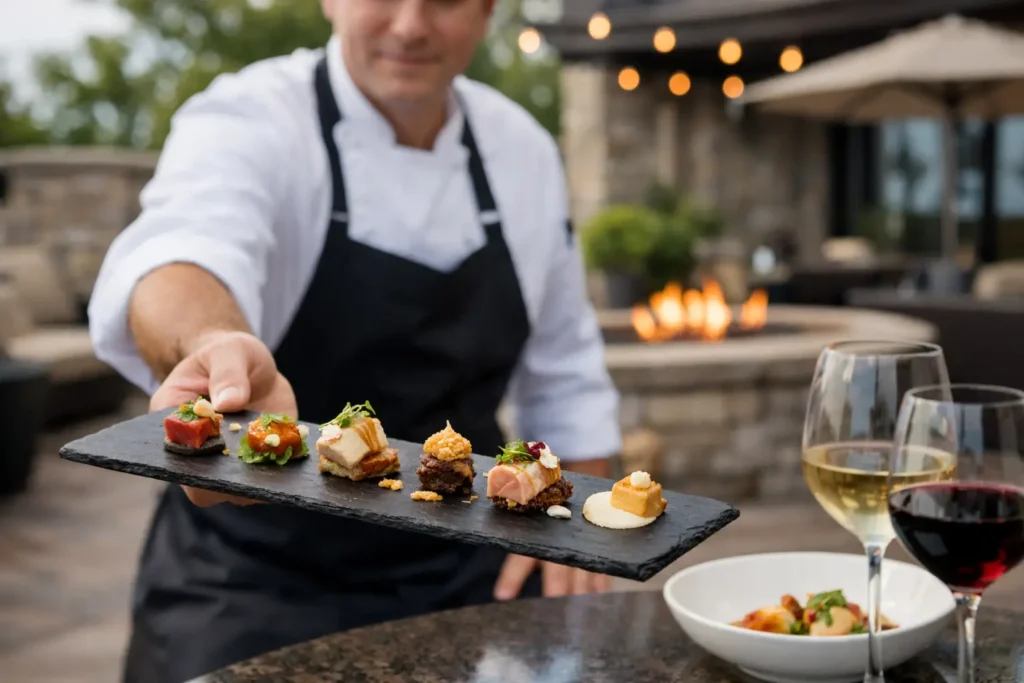
A memorable dinner has a rhythm. The first bite sparks curiosity, the next course builds anticipation, and by dessert, the table has settled into the kind of easy conversation that only follows an exceptional meal. An executive chef tasting menu is designed for precisely that experience: a composed evening of distinctive flavors, thoughtful service, and the pleasure of letting a chef lead the way.
For a client dinner in the Financial District, a polished date night, or a celebration that deserves more than a standard reservation, a tasting menu offers something rare. It makes the meal feel like an occasion from the moment the first course arrives.
What an Executive Chef Tasting Menu Really Offers
A tasting menu is not simply a smaller portion of several menu favorites. It is a progression. Each course has a purpose, whether it is to introduce a bright seasonal ingredient, contrast a richer dish, or create a moment of surprise before the evening moves forward.
The executive chef sets the point of view. That may mean a refined interpretation of a familiar ingredient, a sauce that pulls several elements into focus, or a final touch of texture that changes the character of a dish. The pleasure is in the sequence as much as the individual plates. A crisp, delicate opening can make a warm seafood course feel more luxurious. A savory course with depth can prepare the palate for a dessert with clean acidity or a restrained sweetness.
This is where chef-driven dining becomes more personal than ordering à la carte. Guests are invited to experience a culinary perspective, not merely choose from a list. The best menus still feel generous and approachable, but they carry a clear sense of authorship.
The Executive Chef Tasting Menu Is About Pacing
Great cuisine can lose some of its impact when the timing feels rushed or uneven. A tasting menu gives the kitchen and service team a shared framework for pacing the table with intention.
Courses arrive when they should, with enough time to enjoy the details without allowing the evening to stall. That matters for business hosts who want a dinner to feel polished, and for couples or groups who want to linger over wine and conversation. Service becomes more attentive because the experience has a natural flow.
The pace should never feel rigid. An excellent dining room reads the table. A party enjoying a second bottle of wine may appreciate a little more space between courses, while guests heading to a show or planning a late-night cocktail may prefer a more efficient cadence. Sophisticated hospitality is not about following a script. It is about making the evening feel effortless.
Small Courses, Full Expression
Tasting portions are often misunderstood as too little food. In reality, they are calibrated for range. Instead of committing to one large entrée, guests can experience several techniques, temperatures, and flavor profiles without leaving the table overwhelmed by a single course.
That balance is especially compelling when the menu includes richer elements. A small serving of silky pasta, a perfectly cooked piece of fish, or a composed meat course can feel deeply satisfying when it is followed by a fresh palate-cleansing note and a graceful dessert. Portion size is part of the chef’s design, not an afterthought.
Why Seasonal Ingredients Matter
The most exciting tasting menus are responsive to the market. They reflect what is at its peak rather than forcing the same dishes onto the plate throughout the year. Spring may call for tender greens, delicate herbs, and bright citrus. Summer can bring sweetness, smoke, and vibrant produce. Cooler months invite deeper sauces, roasted notes, and ingredients with a little more richness.
Seasonality also gives repeat guests a reason to return. A well-executed menu does not rely on novelty for its own sake. It evolves because the ingredients do. The result is a dinner that feels timely and considered, whether you are hosting out-of-town colleagues or making a regular evening in Boston feel more special.
There is a practical advantage, too. Ingredients at their best require less disguise. A chef can let a beautiful scallop, ripe tomato, or carefully sourced cut of beef speak clearly, then enhance it with restraint. Luxury is not always about excess. Often, it is about knowing when to stop.
Wine Pairings Change the Conversation
An outstanding wine and drinks list can turn a tasting menu into a more dimensional experience. A pairing is not intended to compete with the food. It can sharpen a flavor, soften a richer note, or reveal a detail that might otherwise pass unnoticed.
A bright, mineral-driven white may bring lift to shellfish. A structured red can stand beside a savory meat course without flattening its nuance. A dessert wine, sparkling pour, or spirit-forward finish can make the final course feel more complete. The ideal pairing creates contrast and harmony in equal measure.
Not every guest wants a full pairing, and that is part of the appeal of a flexible restaurant experience. One guest may prefer a curated wine progression while another enjoys a designer martini before dinner and selects a single favorite bottle for the table. A knowledgeable team can guide the choice without making the occasion feel overly formal.
At Vintage Restaurant & Lounge Boston, that balance between exquisite food, a Wine Spectator-recognized wine list, and a lively lounge atmosphere makes room for a dinner that can continue well beyond the final course.
When a Tasting Menu Is the Right Choice
An executive chef tasting menu is especially suited to occasions where the details matter. It gives a host an elegant way to welcome clients, creates an easy structure for a milestone celebration, and removes the pressure of deciding what to order on a date night. The table shares a common experience, yet the evening never has to feel rehearsed.
It is also a strong choice for guests who value discovery. If you enjoy asking what the chef is excited about, trying a preparation you would not normally select, and letting the meal unfold course by course, a tasting menu delivers more than dinner. It provides a sense of occasion that is difficult to recreate with a single entrée.
That said, it depends on the mood. A tasting menu may not be the ideal fit for a quick lunch between meetings, a casual round of tapas, or a group with widely varying dietary needs. Some guests prefer the freedom of ordering individually, especially when the night is centered on cocktails and conversation rather than a formal meal. The strength of a versatile restaurant is offering both: the composed precision of a chef-led dinner and the ease of a more spontaneous night out.
Dietary Needs Deserve an Early Conversation
The best tasting menu experiences begin before the first course. Dietary restrictions, allergies, and strong preferences should be shared when making a reservation whenever possible. Advance notice gives the kitchen time to consider alternatives with care instead of making a last-minute compromise.
This is particularly important for multi-course dining, where one ingredient can appear in several forms across the menu. Clear communication protects the guest and allows the chef to preserve the integrity of the experience. A thoughtful accommodation should still feel intentional, beautifully presented, and worthy of the occasion.
A Dinner Worth Dressing Up For
A chef’s tasting menu does not require stiffness. It calls for attention. Put the phone away for a course or two. Ask about the wine. Let the table enjoy the pace rather than treating dinner as a task to complete. In a city full of places to eat, that willingness to be present is what transforms a beautiful plate into a night people continue talking about.
Choose the occasion, share what matters with the restaurant, and arrive ready to savor the details. The most lasting meals are not rushed into memory. They earn their place there, one course at a time.