
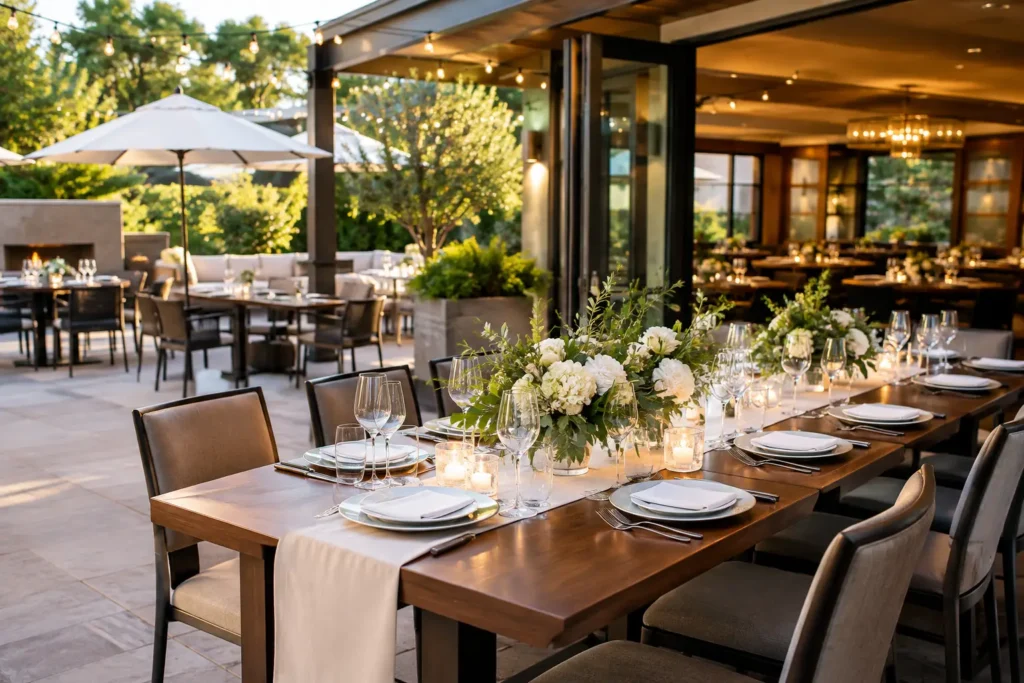
A packed dining room can create energy. It can also turn a toast into a struggle to be heard, a client conversation into a compromise, and a milestone dinner into an evening spent watching the clock. So, are restaurant buyouts worth it? For the right occasion, they turn dinner into something more complete: a room with your name on it, a menu built for your guests, and a pace that belongs to the celebration rather than the next reservation.
The value is not simply in having every table. A restaurant buyout is about control, atmosphere, and the confidence that comes from hosting in a polished setting without taking on the work of creating one from scratch. Still, exclusivity comes at a price. The decision should come down to the experience you need, the people in the room, and whether the event can meet the venue’s food-and-beverage minimum with intention.
What a Restaurant Buyout Really Includes
A full restaurant buyout reserves the entire venue for your group during an agreed service period. Depending on the restaurant, that can include the dining room, bar or lounge, private outdoor space, dedicated staff, custom menu planning, wine selections, specialty cocktails, music coordination, and event styling details.
It is different from booking a large table or a private dining room. Those options give a group more space and often a degree of privacy, but the restaurant remains open to other guests. With a buyout, the room’s visual rhythm, service flow, and social energy are centered on your event.
That difference matters for a company dinner where presentations or speeches are part of the evening. It matters for an engagement party, rehearsal dinner, birthday, or holiday gathering when guests want to circulate freely between dinner and drinks. And it matters when the setting itself is part of the message: this occasion deserved more than a standard reservation.
Are Restaurant Buyouts Worth It for Business Events?
For Boston businesses, the strongest case for a buyout is usually an event that needs hospitality to do real work. Perhaps you are entertaining clients, celebrating a team achievement, welcoming leadership from out of town, or hosting a holiday party that should feel considered rather than compulsory.
A full buyout gives hosts the ability to shape the evening around the group. Guests can arrive to passed tapas and dazzling martinis rather than wait at a crowded bar. A welcome address can happen without competing with another party’s conversation. Dinner can move into a more social lounge moment, allowing introductions and informal conversations that rarely happen when everyone is fixed at one long table.
There is a practical benefit as well. Restaurants already have the kitchen, bar program, furnishings, service staff, lighting, glassware, and operational discipline that a standalone event venue may require you to source separately. When the food and drinks are central to the experience, a restaurant buyout can be a more elegant use of budget than renting an empty room and trying to build an evening around outside vendors.
The caveat is scale. A buyout is not automatically the best choice for a 20-person client dinner or a small team toast. A private room or semi-private area may deliver the intimacy you need while preserving more budget for exceptional wine, a chef-selected menu, or an upgraded cocktail reception.
The Financial Question: Minimums, Not Just Head Count
Most restaurant buyouts are priced through a food-and-beverage minimum. Rather than paying a traditional room rental alone, the host commits to spending a set amount on cuisine and beverages, often before taxes, service charges, and any added production costs. The minimum reflects factors such as the day of the week, season, time of day, guest count, and revenue the restaurant would otherwise expect during that service.
This is why the headline number can be misleading. A Thursday evening in December may command a higher minimum than a Monday lunch, even with the same number of attendees. A prime Financial District date near the holidays has a different value than a quieter summer night. If your dates are flexible, asking about alternate days, lunch events, early-evening receptions, or seasonal patio gatherings can make a buyout considerably more attainable.
The key question is not, “Can we afford the minimum?” It is, “Would we naturally spend close to this amount on an evening our guests will genuinely enjoy?” If the answer is yes, the buyout may be a smart investment. If you find yourself adding bottles, courses, or upgrades solely to reach the number, a private event space may make more sense.
Ask for a clear proposal that separates the food-and-beverage minimum from service charges, taxes, administrative fees, rental items, entertainment, floral arrangements, and overtime. A polished event should feel indulgent to guests, not surprising to the person approving the final invoice.
Privacy Is Valuable, but It Is Not the Only Luxury
Privacy is often the first reason hosts consider a buyout. It protects sensitive conversations, makes speeches easier, and allows guests to relax without feeling they are occupying a corner of someone else’s night out. For a corporate event involving strategy, recognition, or client relationships, that privacy can be worth far more than an extra menu course.
But a successful buyout needs more than closed doors. The restaurant should match the personality of the gathering. A formal awards dinner may call for a seated, coursed meal and a composed wine pairing. A younger company celebration may feel better with elegant stations, shareable plates, a lively bar, and room to move. A family celebration may need comfortable seating, thoughtful dietary accommodations, and a timeline that keeps multiple generations at ease.
The most memorable occasions have a natural progression. Guests arrive, settle in with a drink, enjoy exceptional food, and stay because the atmosphere invites another conversation. A restaurant with a refined dining room and a socially vibrant lounge can make that transition feel effortless. At Vintage Restaurant & Lounge Boston, for example, the combination of chef-driven dining, a recognized wine program, and late-night energy suits gatherings that want both polish and momentum.
Menu Freedom Has Limits, and That Is Often a Good Thing
Hosts sometimes assume a buyout means an unlimited menu. In reality, the best restaurant events work within a focused culinary plan. A kitchen serving a group of 80 or 120 guests needs a structure that protects timing, quality, and presentation. Too many individual choices can slow service and dilute the experience.
That does not mean guests must receive a generic banquet plate. A thoughtful event menu can feel highly personal through passed appetizers, seasonal courses, family-style additions, selected entrées, dessert displays, welcome cocktails, and wine chosen for the group. Dietary needs should be handled early, not as an afterthought sent over the morning of the event.
The right level of customization depends on the goal. For a relationship-building reception, variety and movement may matter more than assigned seating. For a board dinner, a restrained menu and attentive tableside service can feel more appropriate. Let the format support the evening rather than using customization as a measure of value.
When a Buyout Is Not Worth It
A buyout can be excessive when the guest count is too small for the room, the group does not need privacy, or the event is mainly about a quick meal before another activity. It can also be the wrong fit if the budget must stay tightly fixed and guests are unlikely to participate in a meaningful food-and-beverage experience.
Consider alternatives when you want the restaurant’s quality but not its entire footprint. A private room is ideal for focused conversations. A large-group reservation works beautifully for a celebratory dinner that does not require speeches or exclusive access. A cocktail reception in a dedicated section can offer a stylish, flexible format without the commitment of closing the whole venue.
There is also the matter of energy. A group of 35 in a space designed for 150 may feel less intimate than the same group in a private room. Bigger is not always more luxurious. The room should feel full enough to create warmth, movement, and occasion.
Questions to Settle Before You Sign
Before committing, establish the guest-count range, timing, format, and the nonnegotiables that define success. Is this a seated dinner, a reception, or an evening that moves between both? Will there be speeches, presentations, entertainment, branding, or a need for quiet conversation? How many guests will not drink alcohol, and what experience do you want them to have at the bar?
You should also clarify what happens if attendance changes, what deposit and cancellation terms apply, and when final menu choices and guaranteed counts are due. Ask how the team handles allergies, accessibility, coat check, music, vendor deliveries, and event timing. These are not minor details. They are what allow the host to be present with guests rather than managing logistics from a phone.
A restaurant buyout earns its value when it gives your group more than a meal: a distinct setting, graceful service, and room for the night to become the story people retell. Choose it when the occasion calls for that level of attention, then let the table, the toast, and the final round do the rest.