
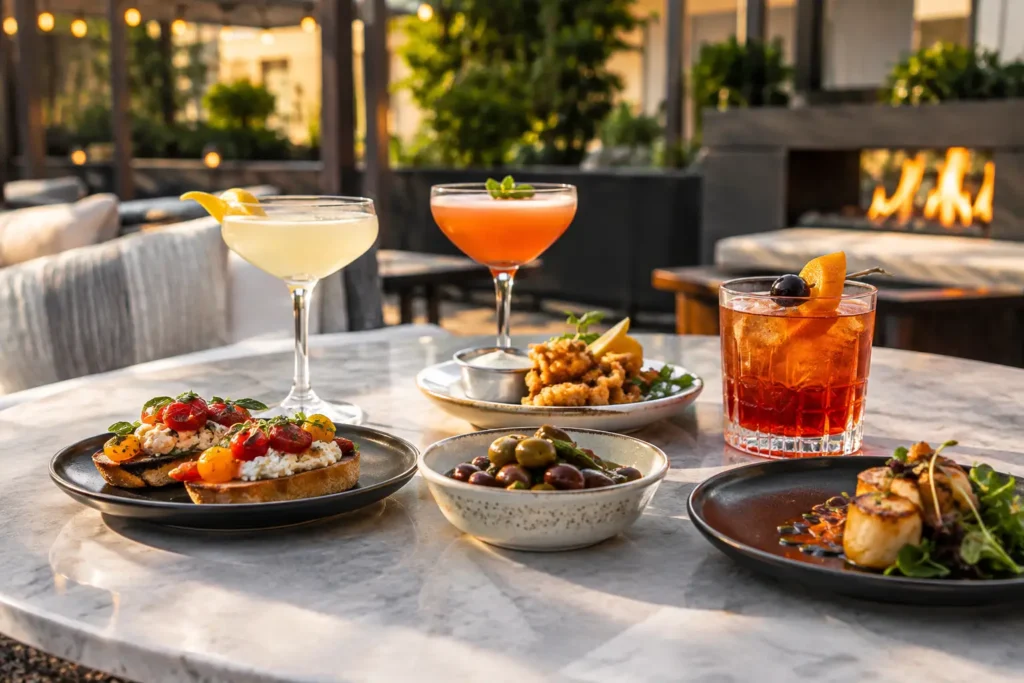
A great night out rarely begins with a full entrée and ends with the check. It begins with a dazzling martini, a few perfectly chosen plates in the center of the table, and the feeling that there is nowhere else you need to be. The best cocktails with small plates create that kind of evening: sociable, indulgent, and polished enough for a client toast, date night, or a spontaneous gathering after work.
The secret is not simply ordering a drink beside something to eat. It is choosing flavors that make each other more vivid. A crisp, citrus-forward cocktail can sharpen the richness of fried seafood. A stirred, spirit-forward classic can stand up to steak, charred vegetables, and aged cheese. When the balance is right, the table becomes an experience in itself.
What Makes a Cocktail and Small-Plate Pairing Work
Cocktails bring acidity, sweetness, bitterness, spice, and texture to the table. Small plates bring salt, fat, umami, char, and crunch. The most satisfying pairings use contrast or harmony deliberately.
Contrast keeps a rich bite from feeling heavy. Think of a chilled gin martini with briny oysters, or a bright margarita alongside crispy calamari. The cocktail’s cold, clean edge resets the palate after each bite. Harmony, by comparison, amplifies a shared flavor note: smoky mezcal beside grilled shrimp, or an espresso martini with dark chocolate and warm spices.
It also depends on the pace of the occasion. For an early evening catch-up, refreshing drinks and lighter plates keep the conversation moving. For a more lingering dinner in the lounge, deeper cocktails and substantial bites create a more luxurious rhythm. There is no single perfect order, but the progression matters.
The Best Cocktails With Small Plates to Order
Martinis with seafood, salty bites, and chilled starters
A classic vodka or gin martini is built for elegance and precision. Its brisk, chilled character is especially good with raw bar selections, crab cakes, oysters, tuna tartare, or a refined plate of olives and marinated vegetables. The saline quality of the garnish and the clean finish of the spirit meet seafood naturally, without masking its delicacy.
For a little more personality, choose a dirty martini with anything that carries a savory note. Fried calamari, truffle fries, deviled eggs, or a crisp croquette all benefit from that touch of olive brine. The trade-off is intensity: a very dirty martini can overpower a mild fish dish, so reserve it for plates with enough salt, crunch, or richness to answer back.
A French martini or a berry-accented martini takes the table in a softer, more playful direction. Pair it with creamy cheeses, duck sliders, or lightly spicy chicken skewers. Fruit-forward cocktails need a savory counterweight, otherwise the combination can lean too sweet.
Margaritas with heat, crunch, and bright flavor
A well-made margarita has range beyond taco night. Its lime-driven acidity and clean tequila finish make it a natural companion for dishes with chile, citrus, avocado, grilled corn, or crispy textures. Try one alongside shrimp tacos, spicy tuna rolls, fried cauliflower, or chicken skewers with a peppery glaze.
For a sophisticated small-plate spread, a jalapeño margarita brings measured heat to rich bites such as short rib sliders or cheese-filled empanadas. A smoky mezcal margarita is more dramatic and works beautifully with charred octopus, grilled mushrooms, or dishes finished with roasted peppers. The smokier the cocktail, the more the food should carry earthiness or char.
If the table is ordering several fried plates, keep the margarita dry rather than overly sweet. Fresh lime, quality tequila, and a restrained orange note do more for food than a sugary mix ever will.
Old Fashioneds with steak, bacon, and deeply savory plates
When the table turns toward richer flavors, the Old Fashioned earns its place. Whiskey, bitters, sugar, and citrus create a drink with enough depth to accompany steak bites, lamb lollipops, bacon-wrapped dates, grilled sausages, or a plate of aged cheese. Its subtle sweetness softens smoke and salt while the bitters keep each sip composed.
This pairing is especially fitting for business dinners and late-night conversations, when the mood calls for something more measured than a round of sparkling drinks. It is not the best choice for delicate ceviche or lightly dressed greens. The whiskey will dominate. But with caramelized edges, roasted flavors, and a little fat, it is a polished match.
A Manhattan offers a similarly confident direction, with a softer, vermouth-led richness. Pair it with mushroom crostini, duck, charcuterie, or anything touched by a balsamic reduction. The key is to avoid dishes that are overly sweet, since they can flatten the cocktail’s complexity.
Spritzes and sparkling cocktails with lighter shared plates
There are nights when the right drink is something lifted, sparkling, and easy to revisit between conversations. An Aperol spritz, elderflower spritz, or sparkling wine cocktail is ideal with burrata, seasonal salads, prosciutto, whipped ricotta, grilled vegetables, or lightly fried arancini.
Bubbles act almost like a squeeze of lemon: they brighten creamy textures and refresh the palate. A spritz is also an excellent opening-round cocktail because it encourages a relaxed tempo. It is less suitable for very spicy dishes or heavily smoked meats, where its delicate bitterness may disappear.
For celebrations, sparkling cocktails bring instant occasion to the table. Pair them with truffle fries, caviar service, lobster rolls, or crisp potato bites. The combination feels festive without requiring a formal, multi-course dinner.
Espresso martinis with dessert and late-night indulgence
An espresso martini has become a late-night signature for good reason. It is sleek, slightly decadent, and a natural bridge between dinner and the rest of the evening. Pair it with flourless chocolate cake, tiramisu, chocolate truffles, or a small plate featuring espresso, caramel, hazelnut, or dark fruit.
The espresso martini can also work with salty, dessert-adjacent bites such as chocolate-dipped bacon or a blue cheese plate with dried fruit. Keep the portions modest. Both the cocktail and the food are rich, and the pleasure lies in contrast, not excess.
Build the Table, Not Just the Pairing
The most memorable cocktail-and-small-plates occasions usually include variety. Start with one chilled or sparkling cocktail alongside a fresh, bright plate. Follow with a savory selection that has texture, such as crispy seafood or a warm croquette. Then bring in one richer, more substantial plate for guests who want to linger.
For a group of four, choose a balance of seafood, vegetables, something crisp, and one heartier dish. This gives different cocktails room to shine and ensures that the table feels generous without becoming unfocused. It also makes ordering easier when preferences vary between the gin martini traditionalist, the margarita drinker, and the guest who wants a bold whiskey classic.
Timing matters as much as selection. Order the first round and two or three plates to begin. Once everyone has settled in, add a second cocktail style or a richer dish based on the direction of the evening. This approach prevents the table from becoming crowded while keeping the experience alive.
Make the Occasion Feel Intentional
Small plates invite sharing, but they do not have to feel casual. Ask for recommendations based on your preferred spirit, the mood of the night, and whether you are eating lightly or making dinner of it. A skilled bartender or server can direct you toward a cocktail that flatters the chef’s menu rather than competes with it.
At Vintage Restaurant & Lounge Boston, that might mean settling into leather seating with a signature martini and chef-driven bites before the night takes its next turn. The beauty of a well-composed cocktail table is its flexibility: it can be a refined beginning, the main event, or the part of the evening everyone remembers.
Choose one drink with brightness, one plate with crunch, and one bite with depth. From there, let the conversation decide what comes next.