
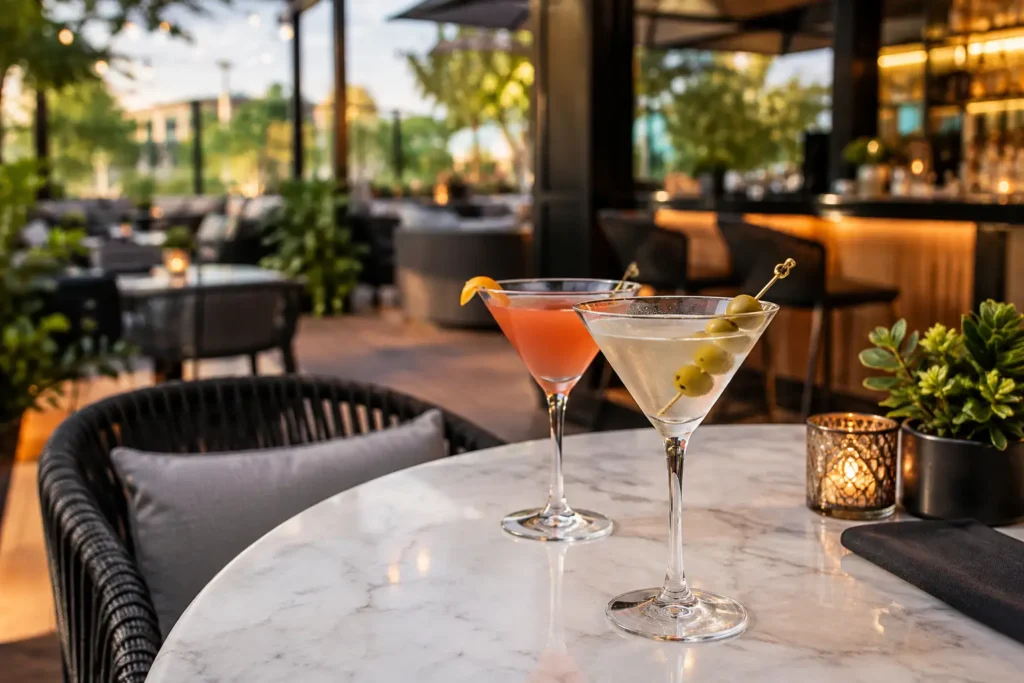
A great martini arrives with a certain kind of ceremony: a chilled glass, a clean pour, the bright twist of citrus or the savory perfume of an olive. But the best martini bars offer more than a beautifully made drink. They create the moment around it – the first stop after work, the elegant setting for a client dinner, the place where a date night gathers momentum instead of winding down.
For Boston professionals and social hosts, that distinction matters. A memorable evening needs more than a strong cocktail list. It needs an atmosphere that feels polished without becoming stiff, food that holds its own beside the drinks, and service that knows when to give a table space and when to keep the occasion moving.
What Separates Great Martini Bars From Ordinary Cocktail Spots
A martini is deceptively simple. Gin or vodka, vermouth, ice, dilution, temperature, garnish. Because there are so few elements to hide behind, details become the whole experience. The right spirit should suit the guest’s preference, the vermouth should be fresh and measured with intention, and the glass should be cold enough to keep the final sip as composed as the first.
That attention should extend beyond the bar. A standout martini bar has a point of view: tailored lighting, a sense of energy in the room, seating that encourages people to settle in, and a drinks list with enough range for every member of the party. The martini may be the signature, but the occasion is rarely one-note. One guest wants a bone-dry gin martini; another is drawn to a bright, fruit-forward vodka cocktail; someone else is choosing from the wine list before dinner.
The most inviting rooms make all of those choices feel equally considered. A leather-clad lounge, a gleaming bar, and the hum of a well-dressed crowd can make a simple Wednesday feel like a proper night out. That is the appeal of a true destination bar: it gives guests a reason to stay for another round, another shared plate, or a late reservation.
The Martini Still Belongs at the Center
The classic martini has endured because it adapts to the person ordering it. Some drinkers prefer London dry gin with just a whisper of dry vermouth and a lemon twist. Others want a silky vodka martini served extra cold with olives. A dirty martini can be crisp and saline when the olive brine is balanced, while a Gibson brings a quietly savory edge with a cocktail onion.
There is no single correct order, only a few decisions worth making. Gin offers botanical character and a firmer, more aromatic finish. Vodka is cleaner and softer, allowing temperature and texture to take the lead. A dry martini uses less vermouth, while a wet martini gives vermouth more room to contribute its herbal complexity. Asking for it shaken or stirred changes the texture and appearance, too. Stirring produces a clear, satin-like drink; shaking creates more aeration and a colder, slightly cloudier pour.
A thoughtful bar program makes room for the classics while giving guests something unexpected. Designer martinis can bring seasonal fruit, spice, floral notes, premium liqueurs, or expressive garnishes into the conversation without reducing the drink to a novelty. The goal is not spectacle for its own sake. It is a cocktail with presence, balance, and a finish that invites the next bite of dinner.
Why Food Changes the Martini Bar Experience
A martini can begin an evening beautifully, but it should not have to carry the entire night. The strongest martini bars understand that food gives cocktails context. A composed dinner turns a quick drink into an occasion. Shareable plates let a group linger. A late-night menu helps the room feel social rather than transactional.
Salt, acid, richness, and texture all matter alongside a chilled cocktail. Briny seafood, crisp fried bites, charcuterie, elevated sliders, and tapas-style plates can complement the drink’s clean, bracing character. A richer entrée may call for a martini before the meal, then a move to wine with dinner. That is not a departure from the experience. It is what a well-rounded restaurant and lounge should make possible.
This flexibility is especially valuable for business dinners and group gatherings. Not every guest arrives with the same appetite or schedule. One person may be joining for a quick cocktail, while another is ready for a full dinner and dessert. When the kitchen, bar, and dining room work together, no one has to compromise on the evening they came out to enjoy.
Choosing Martini Bars for Different Occasions
The right venue depends on the purpose of the night. For after-work drinks, convenience and energy matter. Guests want an easy place to meet, enough style to feel like an upgrade from the office, and a menu that works whether the group stays for forty minutes or several hours.
For a date, the balance shifts toward intimacy. Look for comfortable seating, lighting that flatters rather than overwhelms, and a menu that creates natural moments to share. A proper martini at the start signals intention. It says the evening has been planned, even if the conversation decides where it goes next.
For client entertainment or a celebration, service and versatility become essential. A large group needs a room that can handle the pace without making the table feel rushed or overlooked. An accomplished wine program, chef-driven dishes, and a polished cocktail list give hosts options. They also make it easier to accommodate different tastes without sending the party elsewhere after dinner.
In Boston’s Financial District, that all-in-one experience is particularly valuable. The neighborhood moves from meetings and market activity into dinner, drinks, and private events with little patience for complicated logistics. Vintage Restaurant & Lounge brings those moments together with exquisite menus, dazzling martinis, and a setting designed for both refined dining and a more spirited evening in the lounge.
A Few Details Worth Noticing
The atmosphere of a martini bar is felt before the first sip. Notice whether the bar has enough life to feel celebratory but enough space for conversation. Notice the glassware, the pace of the bartender, and whether the team can describe a cocktail without reciting it like a script. These small signals reveal whether a venue takes hospitality seriously.
The menu should also reward curiosity. A concise selection of well-built signatures is often more appealing than pages of unfocused drinks. The same is true of the wine list: variety is welcome, but thoughtful curation is better. When a restaurant has confidence in its choices, guests can relax into theirs.
There is a practical consideration as well. A martini-forward night can move quickly, particularly before dinner. Eating early, pacing rounds, and alternating with water are simple ways to enjoy the occasion without losing the pleasure of the final course or the conversation across the table. The best evenings have a rhythm, not a rush.
A memorable martini bar gives you that rhythm: begin at the bar, follow the evening toward the table, and leave room for the unexpected second round when the company is too good to cut short.