
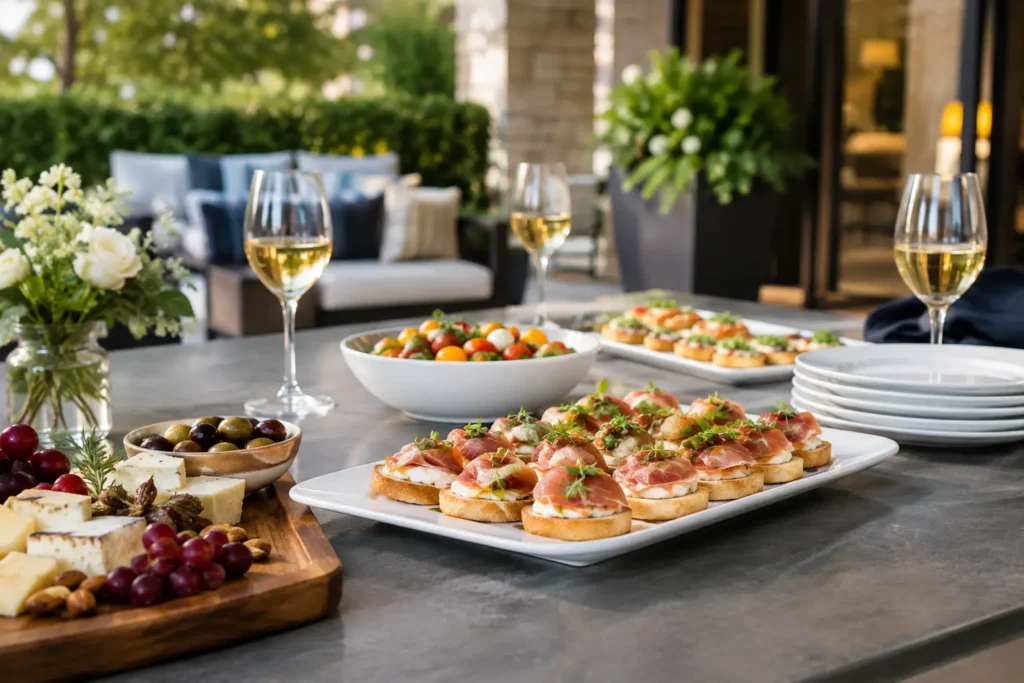
A business dinner begins before anyone opens a menu. It begins with the first martini placed on the table, the ease of the greeting, and the quiet signal that the evening has been thoughtfully arranged. The right business entertaining dishes do more than feed a group. They keep conversation moving, accommodate different appetites, and make hosts look prepared without appearing overmanaged.
For Boston professionals, the ideal client dinner or team gathering sits somewhere between polished and relaxed. It should feel worthy of an important account, a visiting executive, or a hard-won celebration, while leaving enough room for real connection. That balance comes down to pacing, shareability, and a menu with a point of view.
Start with dishes built for conversation
A formal plated dinner has its place, especially when the occasion calls for privacy, ceremony, or a tightly structured agenda. But for many business occasions, the most successful table starts with a few refined plates designed to share. They give guests an easy opening line, remove the pressure of ordering immediately, and create a more social rhythm than a row of individual entrées alone.
Think of warm, polished starters with clear appeal: seafood presented simply, crisp seasonal vegetables, delicate charcuterie, or a rich bite with a bright finish. The goal is not to overwhelm the table with choices. It is to offer a first course that feels generous, familiar enough to be comfortable, and distinctive enough to be memorable.
Shareable dishes work particularly well for a group meeting after work. Arrivals are rarely perfectly synchronized, and a cocktail with a few elegant small plates gives early guests something to enjoy while the table fills in. No one is left waiting awkwardly, and the host is not forced to delay the evening for every last arrival.
Build a business entertaining menu with range
A strong menu for entertaining should offer range without asking guests to decode it. That means balancing richer selections with lighter options, including a thoughtful vegetarian choice, and making room for diners who want an exceptional meal without a heavy evening.
For a party of six to 12, a practical approach is to begin with a curated selection of shared starters, then let guests choose their own entrée. This gives the table a sense of abundance while respecting personal preferences. It also keeps the dining experience polished. Guests can order according to appetite, dietary needs, and schedule without a long negotiation over a preset menu.
For larger groups, a family-style or coursed format can be more effective. The trade-off is that it requires more advance planning. A preset selection makes service smoother and helps maintain the evening’s pace, but it should still include enough variety that no guest feels like an afterthought. A balanced arrangement might include one seafood option, one meat selection, one vegetable-forward dish, and a starch or grain that ties the table together.
Favor recognizable luxury over unnecessary novelty
Business entertaining is rarely the moment to make every course a culinary dare. The most impressive dishes are often those that feel immediately inviting, then reveal skill in the details: a beautiful sauce, impeccable texture, seasonal ingredients, or a thoughtful contrast of acidity and richness.
A perfectly prepared steak, refined pasta, fresh fish, or elegant roast can make a stronger impression than a dish that asks guests to take a leap of faith. Novelty has a place, particularly for creative teams or a celebratory night out, but the host’s first responsibility is comfort. Guests should feel taken care of, not tested.
This is also why seasonality matters. A menu that follows the time of year naturally gives the evening a sense of occasion. Brighter preparations and outdoor café energy suit warmer months; deeper flavors, fuller reds, and richer textures create an inviting frame when Boston evenings turn cool.
Match the dishes to the purpose of the evening
Not every client dinner should look the same. The best choice depends on what the gathering needs to accomplish.
A first meeting calls for dishes that are easy to share and easy to eat. Avoid selections that are overly messy, intensely aromatic, or difficult to manage while speaking. The room should feel relaxed, and the food should support the conversation rather than become its subject.
For a relationship-building dinner with an established client, the menu can be more indulgent. Begin with dazzling cocktails and composed small plates, then move into a memorable entrée and a dessert worth lingering over. This is the setting where a distinguished wine selection and a knowledgeable recommendation can add genuine value. The message is not extravagance for its own sake. It is care.
A team celebration benefits from a livelier approach. Tapas-style dishes, varied textures, and a mixture of savory bites create an energy that feels social rather than procedural. This format is especially effective when the evening may continue into the lounge for another round. A dinner that evolves naturally into drinks feels less like an obligation and more like a reward.
For senior leaders, investors, or a milestone negotiation, restraint is often the more sophisticated choice. Fewer courses, excellent ingredients, attentive service, and a calm setting make the strongest impression. When the stakes are high, the room, the service, and the timing should be doing as much work as the menu.
Think about the drink program early
Food and drink should arrive as part of the same plan. A host who chooses a few opening cocktails, considers wine with dinner, and makes a graceful nonalcoholic option available creates an experience that feels complete.
The best opening drinks set the mood without dominating it. A crisp sparkling selection, a classic martini, or a seasonal cocktail can bring people into the evening quickly. After that, wine should follow the food and the table. A versatile white can carry seafood and lighter starters, while a measured red selection suits richer entrées. If the group has varied tastes, offering both by the glass avoids the awkwardness of committing to bottles no one quite wants.
Nonalcoholic drinks deserve the same attention. A well-made zero-proof cocktail or thoughtful sparkling option ensures every guest can participate in the ritual of the evening. It is a small detail with an outsized effect on hospitality.
Pace the meal like a host, not a scheduler
The difference between a good business dinner and a great one is often timing. Courses should arrive with enough space for conversation, but not so slowly that the room loses momentum. The host can help by setting expectations with the restaurant in advance: arrival time, desired finish time, whether speeches are planned, and whether the group will move to cocktails afterward.
Do not try to pack every possible moment into the reservation. A client dinner is not improved by an extra appetizer, a second bottle, and a rushed dessert simply because the calendar allows it. Leave room for the conversation to find its own shape.
At Vintage Restaurant & Lounge Boston, that balance can move naturally from a polished dinner table to the lounge, where leather seating, designer martinis, and an outstanding wine and drinks list extend the night with confidence. For hosts, that flexibility is valuable. One venue can support a composed business meal, a celebratory toast, and the unplanned conversation that often becomes the real reason to gather.
Details that protect the guest experience
A thoughtful host considers the practical details before they become visible. Confirm dietary restrictions discreetly when the invitation goes out. Ask whether guests prefer a quieter table or a more energetic setting. If the group includes people meeting for the first time, place them so the conversation can flow across the table rather than splitting into separate pockets.
It also helps to decide where the budget should show. Usually, it is better to invest in the quality of the opening welcome, the core meal, and the wine or cocktail program than to stretch the menu across too many courses. Guests remember how the evening felt. They remember whether service was poised, whether the food was exceptional, and whether they could relax.
Dessert is the final opportunity to leave a clear impression. One or two shareable selections with coffee or after-dinner drinks can be exactly right. If guests are ready to continue the evening, it gives them a reason to stay. If they need to depart, it provides a gracious closing point without dragging the meal beyond its natural finish.
The most effective business entertaining dishes create a table where no one has to think too hard about what comes next. Choose food with presence, give the evening a little room to breathe, and let the quality of the setting speak for your taste.