
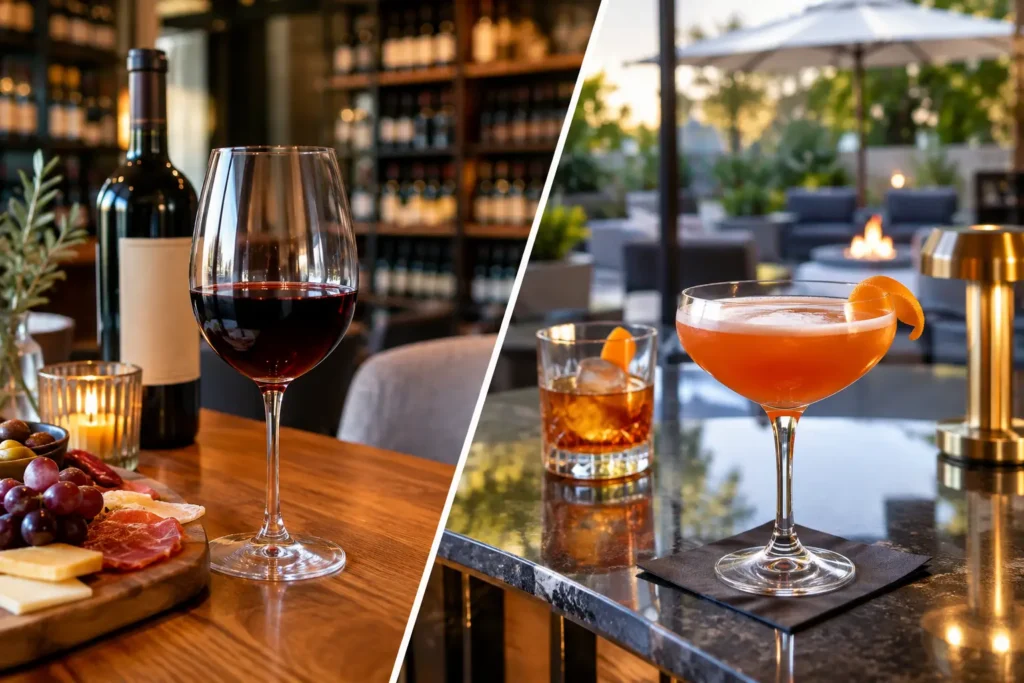
A wine bar versus cocktail lounge decision is rarely just about what is in your glass. It sets the pace of the evening: whether you are settling into a lingering dinner, catching up with a client after work, meeting friends for a polished night out, or planning a date that deserves more than a rushed round of drinks. In Boston’s Financial District, where a single evening can move from business to celebration quickly, the right setting makes the occasion feel effortless.
Both experiences can be sophisticated, social, and beautifully designed. The distinction lies in their center of gravity. A wine bar tends to invite conversation, discovery, and food that holds your attention. A cocktail lounge brings more energy, visual flair, and a sense that the night may still have somewhere to go.
Wine Bar Versus Cocktail Lounge: The Essential Difference
A wine bar is built around the bottle, the pour, and the pleasure of pairing. Its strongest evenings are unhurried. Guests may compare regions, share a flight, order another small plate, and let conversation develop over a second glass. The best wine bars make expertise feel welcoming rather than academic, offering a thoughtful list with familiar favorites alongside bottles worth discovering.
A cocktail lounge is built around the moment. The room may be moodier, the music more present, and the service calibrated for a lively rhythm of shaken martinis, spirit-forward classics, and inventive signatures. There is often a stronger visual element: a dazzling coupe arriving at the table, a carefully cut garnish, the theater of a drink prepared with precision.
Neither format is inherently more refined. A great wine bar can feel glamorous, and a great cocktail lounge can offer serious hospitality. The question is whether you want the evening to revolve around a shared table and a measured pour, or around a sharper, more social drinks experience.
Choose a Wine Bar When Food and Conversation Lead
A wine bar is a natural choice when the people across the table are the main event. Perhaps you are meeting someone you have not seen in months, entertaining a client, or enjoying a date where a long dinner is the point rather than the prelude. Wine gives the evening a comfortable cadence. One bottle can carry a conversation from appetizers through dessert without interrupting it.
Food is usually a defining part of the experience. The menu may focus on seasonal ingredients, cheese and charcuterie, seafood, roasted dishes, or shareable plates designed to reveal something different in each wine. A bright white can sharpen a crudo course; a structured red can bring depth to steak, lamb, mushrooms, or rich pasta. When the kitchen and cellar work together, the meal feels considered from the first bite to the final pour.
Wine bars also suit guests who enjoy choice without needing spectacle. A well-organized list makes room for many moods: a crisp glass of sparkling wine for an after-work toast, an elegant Burgundy for dinner, a bold Cabernet for a celebratory table. There is pleasure in finding the bottle that fits the occasion, especially with a knowledgeable server who can make a recommendation based on taste rather than jargon.
That said, wine bars are not always quiet. A busy room can be lively, social, and distinctly late-night. The difference is that its energy generally comes from the table: shared bottles, great food, and conversations that extend because nobody is ready to leave.
Best occasions for a wine-forward evening
Choose wine when you are planning a client dinner, a date centered on cuisine, a birthday meal with friends, or a group that appreciates taking its time. It is also a strong option for hosts who want to make guests feel cared for. Ordering a bottle to share creates an immediate sense of generosity and occasion.
For private gatherings, a wine-led format can offer an especially polished structure. Pairings, passed small plates, and a seated meal give the event a beginning, middle, and memorable finish. It works beautifully for milestone dinners, team celebrations, and intimate receptions where guests should have space to connect.
Choose a Cocktail Lounge When Energy Is the Point
A cocktail lounge is ideal when the plan is less about dinner and more about the feeling of going out. You may arrive after a long day ready for an expertly made martini, meet a group before an event, or want a stylish place that can take you from the office into the evening without changing the mood entirely.
Cocktails bring immediate personality. A martini signals clean, classic confidence. An Old Fashioned feels measured and warm. A bright citrus cocktail can make a crowded table feel celebratory. The menu also gives each guest a personal lane: one person can order tequila, another gin, another a spirit-free drink, without the shared decision-making that comes with a bottle of wine.
The strongest lounges understand that a drink must be more than photogenic. Balance matters. Ice quality matters. Fresh citrus, premium spirits, proper glassware, and a bartender who knows when to keep a classic untouched all matter. A memorable cocktail feels composed, never overworked.
A lounge can be the better choice for groups with different appetites and different schedules. Some guests may want tapas and a full round, while others want one drink before heading elsewhere. The format accommodates both without making anyone feel as though they are skipping the main event.
Best occasions for a cocktail-led evening
Choose a lounge for after-work drinks, a stylish first date, a pre-theater gathering, or a birthday group that wants to keep the energy up. It is also a smart answer when your guests have varied tastes. A broad cocktail menu, thoughtful wine by the glass, and elevated bar plates offer enough range for everyone to find their signature.
For event planners, the lounge style often works best for a standing reception or a less formal celebration. Guests can circulate, connect across groups, and enjoy drinks that feel festive from the moment they arrive. The trade-off is that intimate conversation can be harder if the room is especially active or the music rises later in the night.
The Atmosphere Can Matter More Than the Menu
When deciding between a wine bar and a cocktail lounge, consider the atmosphere you want your guests to remember. Lighting, seating, sound, and service style can change the entire experience before a drink reaches the table.
A wine-focused room often favors warmth and comfort: a table that encourages staying, softer lighting, and a dining rhythm that makes a second course feel welcome. A cocktail lounge may lean into drama with leather seating, glowing bar tops, darker corners, and a more electric soundtrack. Neither approach is better. They simply send different signals.
For a date, ask what kind of connection you want to create. A wine bar offers an easy excuse to share and discuss, while a lounge creates a little more sparkle and spontaneity. For business, a quieter wine-forward setting may support focused conversation, but a polished lounge can be perfect for building rapport after the formal meeting is done.
Location matters as well. In the Financial District, convenience is part of good hospitality. The best venue is often one that can meet a group for dinner, welcome late arrivals for drinks, and still feel special enough for a celebration. Flexibility is valuable when the evening does not follow a strict script.
Why You May Not Need to Choose
The most compelling nights often borrow from both formats. Begin with an outstanding wine pairing over dinner, then move into designer martinis and shareable plates as the room becomes more social. Or start at the bar with cocktails, then settle into a meal when the conversation deserves more time.
This is where a destination restaurant with a serious wine list and a confident lounge program earns its place. At Vintage Restaurant & Lounge Boston, guests can shape the evening around the occasion, from chef-driven dinner and curated wine to tapas, dazzling martinis, and private celebrations in a polished setting.
The real test is simple: choose the place that gives your night room to become what it needs to be. A bottle may invite a conversation worth lingering over. A cocktail may turn an ordinary Wednesday into a celebration. When the food, drinks, and room all feel right, stay for the next round.