
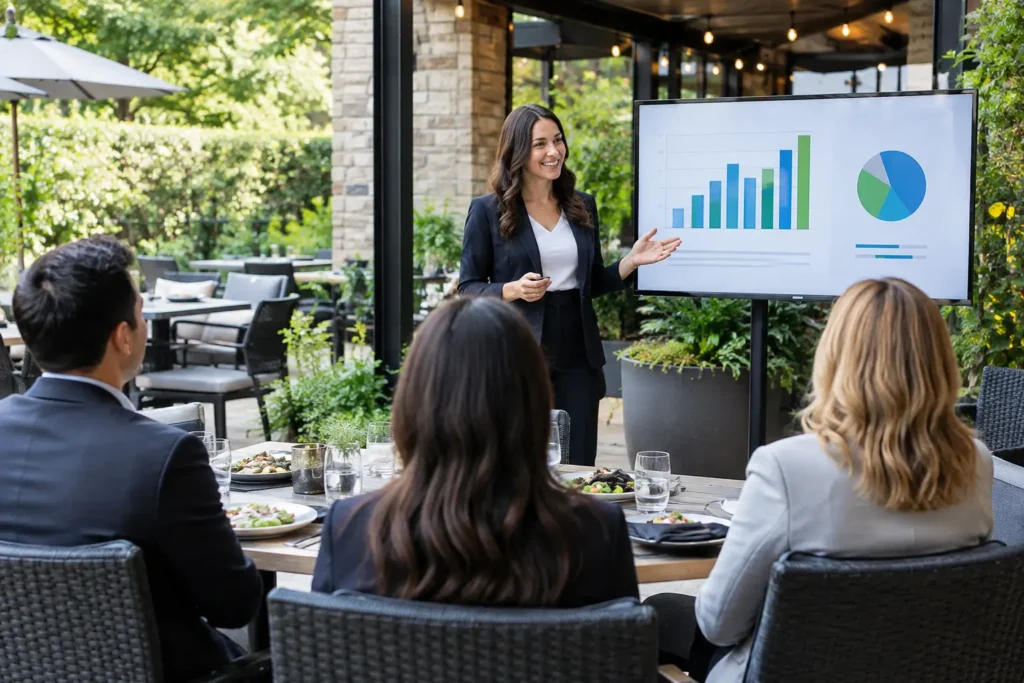
A client presentation deserves more than a corner table and a laptop balanced beside a water glass. Can restaurants accommodate presentations? Absolutely – when the room, timing, service style, and technical needs are planned with the same care as the menu. For Boston professionals, the right restaurant setting can turn a routine meeting into an occasion that feels focused, hospitable, and genuinely memorable.
A polished dining room can offer something a conventional conference room cannot: atmosphere. The setting signals that the people in the room matter. Yet an impressive lunch or evening gathering only works if the presentation remains easy to see, hear, and discuss without competing with the energy of the restaurant.
Can Restaurants Accommodate Presentations for Business Groups?
Yes, but the answer depends on the nature of the presentation and the space available. A brief pitch to six guests, a quarterly update for 20 colleagues, and a formal presentation for 50 attendees have very different requirements. The most successful restaurant events begin with an honest conversation about the size of the group, the purpose of the meeting, and how much of the gathering needs to be presentation-focused.
Private dining rooms and semi-private spaces are often the best fit. They give hosts more control over sound, seating, lighting, and service pacing while preserving the warmth of a restaurant experience. For smaller groups, a well-positioned table in a quieter section may be enough, particularly when the presentation is informal and conversation is the priority.
The trade-off is simple: the more technical or formal the agenda, the more private the setting should be. A restaurant is ideal for a focused talk paired with exceptional food and drinks. If the event involves all-day training, multiple breakout sessions, or detailed demonstrations requiring extensive equipment, a dedicated meeting venue may be the stronger choice.
Start With the Room, Not the Menu
The menu matters, especially when entertaining clients or celebrating a team milestone. But the room determines whether guests can engage with the presenter. Before confirming a restaurant, ask about the layout and what can be adjusted for your group.
A long communal table creates an intimate, conversational feel, but guests seated at the far end may struggle to see a screen. Rounds make it easier to serve a meal and encourage discussion, though they take more space. Theater-style seating maximizes sightlines for a presentation but is less suited to a full dinner. For many business gatherings, a U-shaped arrangement or one long table facing a monitor provides a confident middle ground.
Consider where the presenter will stand and whether every guest has a clear line of sight. A screen placed against a bright window can wash out slides. A presenter positioned near the bar may be competing with glassware, conversation, and the natural pulse of the room. A site visit is worthwhile for any high-stakes event. It allows the host to visualize the guest experience before invitations go out.
Privacy and sound set the tone
Visuals are only half the equation. If guests cannot hear the speaker, the most beautifully designed deck will not land. Ask whether the room has doors, curtains, architectural separation, or other sound buffers. Find out what the surrounding restaurant environment is typically like at your preferred time.
Lunch may offer an efficient setting for a board update or client discussion, while an early evening reception can feel more celebratory. Late-night energy is perfect for cocktails and connection, but rarely the right moment for a detailed financial presentation. There is no universal best time. The right choice depends on whether guests should be taking notes, making decisions, or simply enjoying one another’s company after the formal remarks.
Technology Should Feel Invisible
Restaurant presentations do not need to be elaborate, but they do need to work. A clean screen, reliable display connection, appropriate lighting, and a microphone when the group warrants one are the essentials. Confirm exactly what the venue provides and what your team must bring.
Do not assume that a screen includes a projector, speakers, adapters, clicker, or stable wireless access. If your slides contain video or audio, test it in the actual room. If the presenter is using a personal laptop, bring the correct adapters and a backup copy of the presentation on a second device or drive. These small details protect the mood of the event.
For a group of 10, a large monitor may be more effective than a projector. For a larger audience, a projector and screen can make sense, provided the lighting can be lowered without making the room feel closed off or disrupting service. A microphone becomes valuable when guests are seated across a large room or when the agenda includes remarks from several speakers.
Keep the presentation visually restrained. Restaurant spaces are already rich with color, texture, glassware, and movement. Slides with oversized type, limited text, and strong imagery will read better than crowded spreadsheets. If detailed material is essential, offer it as a printed handout or send it after the event rather than asking guests to decipher it from across the table.
Build the Service Around the Agenda
The difference between a lunch that feels effortless and one that feels interrupted is timing. Share a clear run of show with the event team: arrival, welcome drinks, presentation start, meal courses, question period, and closing remarks. The kitchen and service staff can then help create natural pauses rather than accidentally delivering entrées during a key point.
For a 60- to 90-minute business lunch, a brief welcome and presentation before the first course often works well. Guests settle in with water or a first drink, hear the main message, and move into a more relaxed conversation over the meal. For evening events, cocktails and passed bites can create an easy arrival window before guests take their seats for remarks.
A plated menu is typically the most controlled option for a presentation-centered gathering. It keeps service orderly and reduces the movement associated with buffet lines or shared stations. Family-style dishes and tapas create a social, generous atmosphere, but they are best reserved for events where the presentation is short or completed before the meal begins. A room full of guests passing plates is a wonderful scene, just not the ideal backdrop for a 30-minute talk.
Dietary needs should be collected in advance, not handled at the table. This gives the host more time to welcome guests and ensures everyone can enjoy the meal without drawing attention to an accommodation. Beverage service deserves the same thought. Wine, cocktails, and alcohol-free options can elevate a client dinner, but the host should decide whether drinks are served before, during, or after the formal content based on the tone of the meeting.
Make the Gathering Feel Like Hospitality, Not a Conference
The appeal of hosting at a restaurant is that business can happen without feeling sterile. A carefully chosen menu, attentive service, and a room with character invite guests to stay engaged long after the final slide. The presentation should support that experience, not consume it.
This is especially valuable for client introductions, investor dinners, leadership conversations, team celebrations, and product conversations where trust matters as much as data. In Boston’s Financial District, a restaurant event can also offer practical advantages: an accessible location, a more inviting alternative to the office, and a setting that transitions naturally from daytime discussion to evening cocktails.
At Vintage Restaurant & Lounge Boston, for example, a private gathering can pair a polished setting with chef-driven dining, an outstanding wine and drinks list, and the social ease of a lounge environment. That combination is well suited to groups that want to make a strong impression without overproducing the occasion.
Give guests a reason to stay
The most effective restaurant presentations leave room for connection. Avoid scheduling every minute. A short reception before the talk lets guests arrive without pressure, while a relaxed close gives presenters time for the conversations that rarely happen in a boardroom.
If you are hosting senior clients or a group that does not know one another well, a concise introduction and a clear purpose can make the room feel more comfortable. Name tags may be useful for a larger networking event, though they can feel overly formal for an intimate dinner. The details should match the occasion: refined, welcoming, and never fussy.
Before booking, communicate the guest count, desired seating style, technology list, presentation length, dietary requirements, and ideal service timing. A restaurant team can deliver a far more polished experience when it understands the full vision. Give the room a clear role in your event, and it can do what great hospitality does best: make an important conversation feel worth gathering for.