
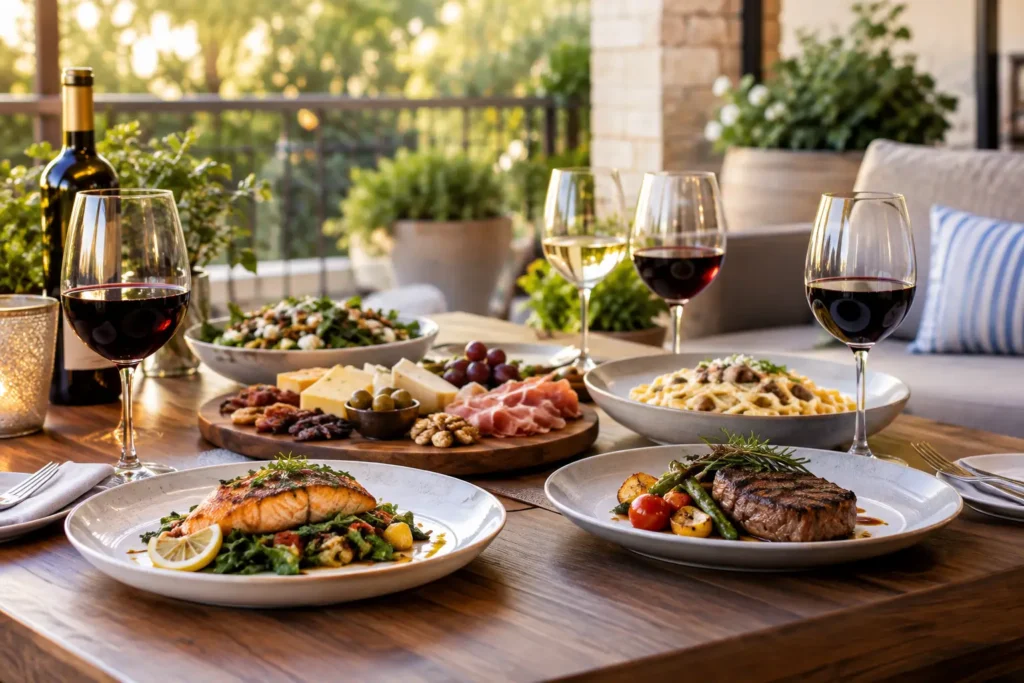
The right bottle can make a beautifully prepared dinner feel even more considered. The best dishes for wine pairing do not require obscure ingredients or rigid rules. They simply give the wine something to complement, contrast, or carry – turning a client dinner, date night, or celebratory table into an experience guests remember.
What Makes a Dish Pair Well With Wine?
Wine pairing begins with balance, not labels. Richness needs freshness, salt can soften tannin, acidity can brighten cream and butter, and a little sweetness in the wine can calm heat. A pairing works when neither the food nor the pour overwhelms the other.
Consider the sauce as seriously as the main ingredient. A delicate white fish in lemon beurre blanc calls for a different glass than that same fish with smoky chorizo and tomato. Likewise, a steak with peppercorn sauce may welcome a bold red, while a steak served with herb salsa verde can be more flexible.
Texture matters, too. Creamy dishes often shine beside wines with lively acidity. Charred, roasted flavors can handle oak or a deeper red. Salty bites, from oysters to aged cheese, have a remarkable way of making sparkling wine taste even more expressive. The goal is not perfection on paper. It is a table where each sip invites another bite.
12 Best Dishes for Wine Pairing
Oysters with Champagne or Muscadet
Oysters bring briny freshness, cool texture, and a clean finish that calls for a wine with lift. Traditional-method sparkling wine offers fine bubbles and citrus notes that feel celebratory without covering the oyster’s natural salinity. For a more mineral-driven pairing, choose Muscadet. Its crisp, coastal character meets the oyster exactly where it lives.
Skip overly oaked whites here. They can make the pairing feel heavy, especially when the oysters are served simply with mignonette or lemon.
Lobster with Chardonnay
Butter-poached lobster and Chardonnay are a classic for good reason. A restrained, barrel-aged Chardonnay can echo the lobster’s sweet richness with notes of toasted brioche, citrus, and gentle creaminess. The wine should still have enough acidity to keep the palate awake.
If the lobster is grilled and finished with bright herbs rather than butter, consider an unoaked Chardonnay or Albariño. The preparation should lead the decision, not the ingredient alone.
Goat Cheese Salad with Sauvignon Blanc
Tangy goat cheese, peppery greens, fresh herbs, and a lemony vinaigrette practically ask for Sauvignon Blanc. Its vibrant acidity and herbal edge mirror the salad’s flavors while bringing clarity to creamy cheese. This is an especially polished choice for a lunch meeting or an opening course before a richer entrée.
A very sweet dressing can throw the balance off. Keep the vinaigrette sharp and restrained, or choose a wine with a touch more fruit, such as dry Chenin Blanc.
Mushroom Risotto with Pinot Noir
Earthy mushrooms and silky risotto call for nuance rather than sheer power. Pinot Noir, with its red-fruit fragrance, savory undertones, and soft tannins, lets the mushrooms remain the center of attention. It is particularly lovely with porcini, wild mushrooms, or a hint of truffle.
A fuller white can work as well, especially if the risotto is finished with plenty of Parmesan. In that case, choose a textured Chardonnay with balanced oak instead of a buttery wine that turns the dish too rich.
Seared Scallops with Chenin Blanc
Scallops offer sweetness and a caramelized crust, which makes them one of the most flexible seafood dishes on the table. Dry Chenin Blanc brings orchard fruit, acidity, and a subtle waxy texture that feels composed alongside a golden sear and brown butter.
For scallops with cauliflower purée or smoky bacon, a lightly oaked Chardonnay can also be excellent. If the plate leans toward citrus, herbs, or spring vegetables, stay with a fresher style of Chenin.
Roast Chicken with Chardonnay or Pinot Noir
Roast chicken is one of the most accommodating dinner-party dishes because it can move gracefully between white and red wine. Chardonnay works beautifully with a creamy pan sauce, roasted garlic, or buttery potatoes. Pinot Noir is a more compelling choice when the chicken is deeply roasted with mushrooms, thyme, or a crisp, savory skin.
This is a smart selection when guests have different preferences. Place both bottles on the table and let the menu create the conversation.
Salmon with Pinot Noir
Salmon has enough richness to stand up to a red, but it needs a red with restraint. Pinot Noir offers bright cherry fruit and gentle structure without overwhelming the fish. It is especially elegant with roasted salmon, lentils, mushrooms, or a glazed preparation that has a little sweetness.
For salmon with a bright cucumber, dill, or citrus treatment, dry rosé is a stylish alternative. Avoid heavily tannic reds, which can leave a metallic impression beside fish.
Tomato-Based Pasta with Sangiovese
A polished bowl of pasta with tomato sauce, basil, Parmesan, and a slow-simmered ragù deserves a red with acidity. Sangiovese has the savory cherry character and freshness to meet tomato’s natural tang, while its medium body keeps the meal lively rather than weighty.
Barbera is another excellent choice, particularly with sausage, meatballs, or a rich Bolognese. Both wines can handle the acidity that makes tomato sauces difficult for many softer, lower-acid reds.
Spicy Tapas with Off-Dry Riesling
Heat changes the rules. High-alcohol wines can make chile spice feel more intense, while an off-dry Riesling cools the palate with refreshing acidity and a hint of sweetness. It is a confident match for spicy shrimp, chorizo, Korean-inspired wings, or pepper-forward small plates.
For less fiery tapas, Grüner Veltliner is equally compelling. Its dry, peppery profile plays well with fried bites, herbs, and salty cured meats. Serve it well chilled and let the food keep the energy high.
Grilled Steak with Cabernet Sauvignon
Steak and Cabernet Sauvignon remain a signature pairing because fat softens the wine’s firm tannins, while the wine’s black-fruit depth complements the steak’s char. A ribeye can carry a generous Cabernet, particularly with a classic bordelaise, roasted mushrooms, or a rich reduction.
For leaner cuts such as filet mignon, choose a more refined Cabernet or a Cabernet-based blend with polished tannins. The goal is structure, not a wine so forceful that every bite disappears behind it.
Herb-Roasted Lamb with Syrah or Rioja
Lamb’s savory richness is beautiful with Syrah, especially when the dish includes rosemary, garlic, olives, or a smoky grill finish. Syrah brings dark fruit, black pepper, and a subtle meaty character that feels made for the plate.
Rioja offers a softer, more elegant route, with red fruit, cedar, and warm spice. Choose it for lamb with Mediterranean flavors or a more delicate preparation. Both options make the meal feel generous and composed.
Dark Chocolate with Port
A dark chocolate dessert needs a wine with enough sweetness to avoid tasting thin or bitter beside the cocoa. Ruby Port is a natural choice, with plush berry fruit and warming richness that flatters chocolate torte, truffles, and flourless cake.
Keep the dessert dark rather than excessively sugary. Milk chocolate can work, but the pairing becomes less dramatic. For guests who prefer a lighter finish, serve a smaller portion of chocolate with fresh berries and a chilled glass of late-harvest wine.
Set the Table Around the Occasion
For a business dinner, choose dishes that allow wine to support the conversation: oysters, roast chicken, salmon, or steak provide instant confidence without requiring a complicated explanation. For a social evening, build momentum with tapas and sparkling wine, then move into a more substantial course. A date night can be as simple as scallops and Chenin Blanc or mushroom risotto and Pinot Noir.
Temperature and pacing matter as much as the pairing itself. Chill whites and sparkling wines thoroughly, but do not serve them ice-cold. Let reds breathe briefly and pour modestly so guests can revisit the glass as the dish changes on the plate. Two thoughtfully chosen wines often create a more memorable dinner than a crowded lineup of bottles.
At Vintage Restaurant & Lounge Boston, the most rewarding wine moments are rarely about reciting rules. Choose a dish with character, pour a wine with balance, and leave room for the table to surprise you.