
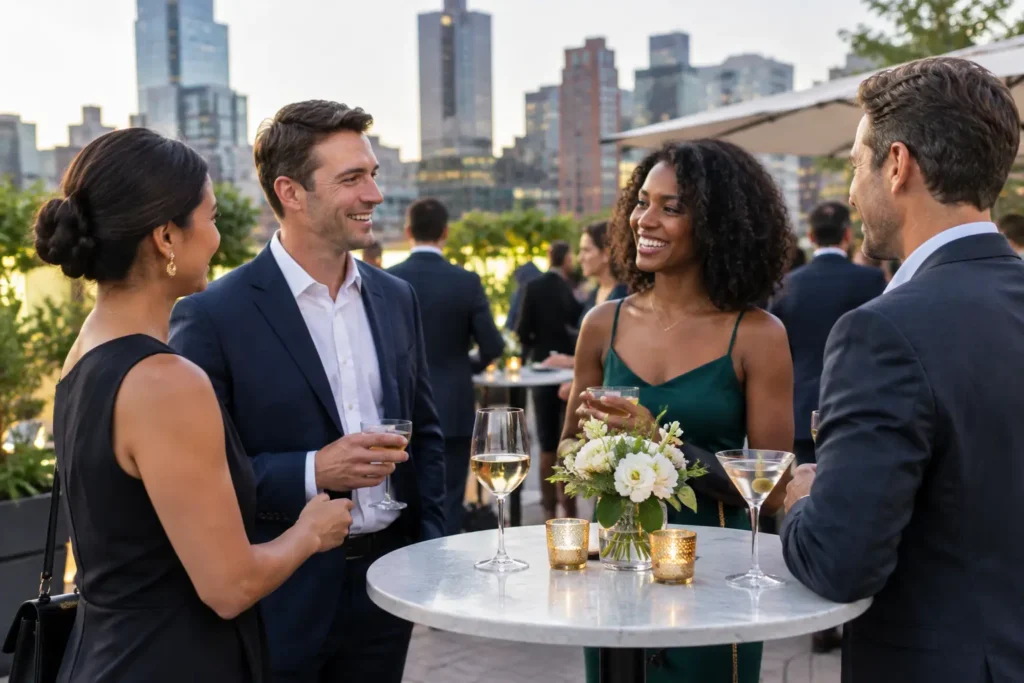
The first glass should arrive before anyone has to wonder where to stand. That is the difference between a room that feels merely booked and one that feels beautifully hosted. This cocktail reception example shows how to shape an evening for colleagues, clients, or friends who expect more than a bar tab and a few passed appetizers.
A great reception has energy, but it also has intention. Guests should be able to circulate naturally, find a meaningful conversation, enjoy a considered bite, and leave feeling that the evening had a point of view. For Boston hosts, that balance matters whether the occasion is a client thank-you, an engagement celebration, a product launch, or an after-work gathering that deserves a little more polish.
What Makes a Cocktail Reception Feel Complete
A cocktail reception is a social event built around drinks, passed small plates, and movement. Unlike a seated dinner, it allows guests to arrive and mingle on their own rhythm. Unlike a casual happy hour, it needs enough structure to feel generous, composed, and worthy of the invitation.
The guest count, occasion, and start time determine the right format. A 60-minute reception after a meeting may only need sparkling wine, wine, beer, two cocktails, and a focused selection of passed bites. A two-hour evening event requires a more substantial food plan, a layered beverage menu, and seating or lounge moments that give guests a place to pause.
The essential question is not how much can be offered. It is what guests need to feel looked after. A shorter, highly edited menu often makes a stronger impression than an overextended selection that arrives without rhythm.
A Cocktail Reception Example: A Two-Hour Client Event
Picture a Thursday evening reception for 55 guests in Boston’s Financial District. The host is thanking clients and introducing a new leadership team. Invitations list a 6:00 p.m. arrival, which gives guests time to transition from the workday without making the event feel like a late-night commitment.
The mood is polished and social: low lighting, a lively lounge playlist, candlelit tables, and enough room for guests to move between the bar, conversation clusters, and a few intimate seating areas. The menu is elegant but easy to enjoy while standing. Nothing requires a knife, a balancing act, or a pause in conversation.
6:00 to 6:30 p.m.: Arrival and First Impressions
As guests enter, they are welcomed with a choice of a sparkling wine pour or a signature martini with a bright seasonal note. A bartender can serve the featured drink quickly, while wine and a nonalcoholic spritz offer equally considered alternatives. The first fifteen minutes should feel effortless, not like a line at a crowded bar.
During arrival, servers circulate with two light passed bites. Think tuna tartare on crisp wontons and petite truffle arancini, or a seasonal crostini paired with a warm, savory canapé. The goal is to settle guests in without filling them up before the evening develops.
Name tags can be useful for a business-facing event, but they should be simple and discreet. If the gathering is primarily social, skip them. The room itself should invite introductions through its layout, not force them through oversized labels.
6:30 to 7:05 p.m.: Conversation Finds Its Pace
Once most guests have arrived, the food becomes more substantial. Servers introduce a second round of passed plates, with a mix of seafood, meat, and vegetarian options. Mini lobster rolls, beef tenderloin crostini, roasted mushroom tartlets, and crisp calamari are familiar enough to be welcoming but elevated enough to match the setting.
This is also the right time to open a small tapas-style station or composed display. A beautiful charcuterie and cheese presentation, seasonal crudités with a refined dip, or a selection of warm flatbreads gives guests an anchor without turning the reception into a buffet line.
For a client event, hosts should make introductions during this stretch rather than immediately at the door. Guests have had time to settle, drinks are in hand, and the room has softened into conversation. The best introductions are specific: connect people over a shared market, project, neighborhood, or interest, not simply title to title.
7:05 to 7:15 p.m.: A Brief Welcome
A welcome should be brief enough that nobody sets down a drink with concern. Five minutes is often plenty. Thank guests for coming, recognize the occasion, and give a genuine reason the room matters. If there is an announcement, keep it focused and deliver it before guests begin deciding whether to slip out.
Avoid turning a cocktail reception into a presentation. People came to connect, and a long program changes the entire atmosphere. If leadership remarks are necessary, one speaker and one clear message will almost always land better than a series of acknowledgments.
7:15 to 8:00 p.m.: The Richest Part of the Evening
After remarks, service should return with its most satisfying selections. This is the moment for items that feel like a small taste of dinner: petite sliders, seared scallops, short rib on polenta, or artfully prepared vegetarian bites with real depth. Guests who came directly from work will appreciate the progression.
Offer a second signature cocktail at this point, especially if the first drink was light and sparkling. A classic Manhattan, a well-made espresso martini, or a sophisticated zero-proof cocktail adds a fresh note to the room. A thoughtful beverage list gives guests a reason to stay for one more conversation.
For an event that calls for a stylish downtown setting, Vintage Restaurant & Lounge Boston offers the kind of leather-clad atmosphere, chef-driven menu, and dazzling martini program that can carry this transition naturally from business gathering to memorable night out.
Build the Menu Around How Guests Will Eat
A cocktail reception menu succeeds when it is delicious in motion. Choose bites that can be eaten in one or two bites, with a napkin rather than a full place setting. Sauces should be contained, skewers should be manageable, and delicate garnishes should not tumble away after the first bite.
Variety matters, but the menu should still feel cohesive. Pair richer selections with something crisp or bright. If you serve short rib, balance it with a citrusy seafood bite or a vegetable-forward option. Include a clearly satisfying vegetarian selection, not an afterthought, and plan for dietary needs before the event rather than improvising during service.
For a two-hour reception, five to seven pieces per guest is a useful starting point when the event falls outside dinner hours. If it replaces dinner, plan more generously and add a substantial station. The right quantity depends on the audience: guests coming from a long workday will eat differently than those meeting after dinner for drinks.
Keep the Bar Edited and Excellent
A full open bar is not always the most elegant choice. An edited menu of wine, beer, two cocktails, and a polished nonalcoholic drink can feel more distinctive while keeping service quick and the event budget clear.
Choose cocktails with speed in mind. Drinks requiring complicated garnishes or lengthy preparation can slow the room at precisely the wrong moment. Pre-batched cocktails, when made with care, allow the bar team to deliver consistency without sacrificing style.
Wine deserves the same attention as cocktails. A crisp white, a versatile red, and a sparkling option will suit most receptions. For a food-forward evening, select bottles that work across seafood, richer meats, and vegetarian small plates rather than chasing novelty for its own sake.
Design the Room for Movement, Not Just Appearance
An impressive room can still fail if guests have nowhere to put a drink or no reason to move beyond the entrance. High-top tables encourage circulation, while a few lower lounge areas create an appealing retreat for quieter conversation. Keep the bar visible, but do not make it the only destination.
Music should give the space pulse without requiring guests to lean across the table. The sweet spot is energetic enough to feel celebratory and restrained enough for clients, colleagues, and new acquaintances to speak easily.
Lighting does more than flatter a room. It signals that the workday has ended and a more social evening has begun. Warm, focused lighting around the bar and food displays adds drama, while softer light in conversation areas keeps the experience relaxed.
The Details Guests Notice Without Naming
Guests remember pace. They notice when the first bite arrives too late, when the bar becomes crowded, or when the final thirty minutes lose momentum. A strong service plan introduces new food at intervals, refreshes glassware quietly, and lets the evening build instead of simply running out of offerings.
They also notice whether the host is present. Do not spend the entire reception troubleshooting, taking photos, or trapped in one conversation. Assign a point person to coordinate timing and vendor questions, then give yourself room to welcome people properly.
The most memorable cocktail receptions feel easy because someone has made disciplined choices behind the scenes. Start with a clear purpose, serve drinks and food with confidence, and create enough comfort for guests to stay longer than they intended. That is when a gathering becomes an occasion people want to talk about the next day.