
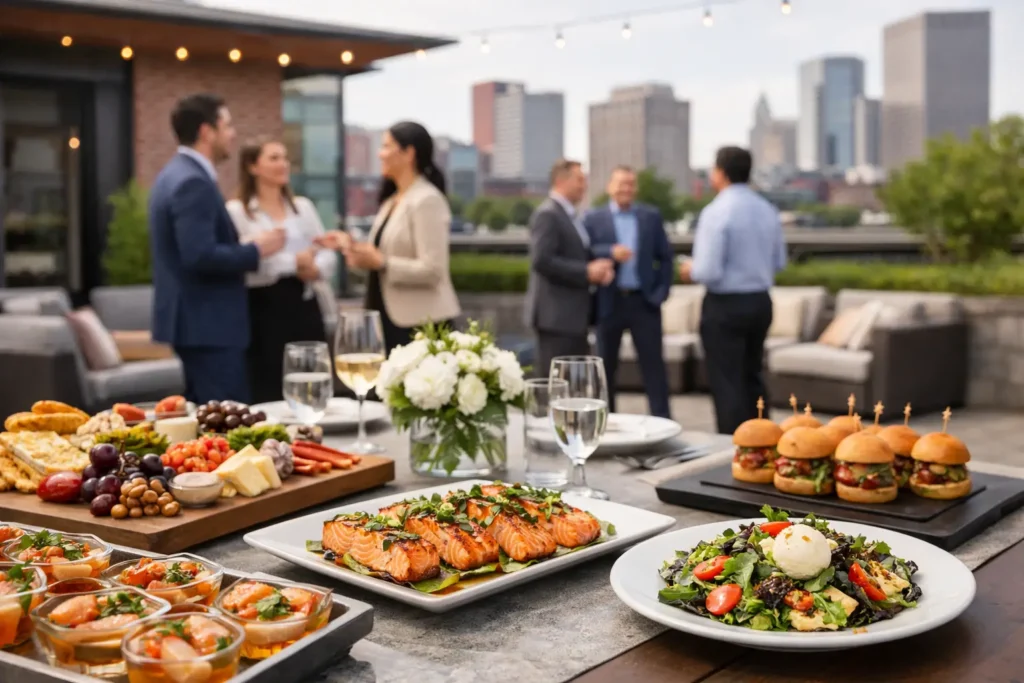
A corporate event can begin with an agenda, but guests decide how it felt in the first few minutes. The welcome drink, the ease of finding something appealing to eat, the rhythm of courses arriving at the table – these details shape the conversation long after the final presentation ends. Thoughtful corporate event menus turn a meeting, client dinner, or team celebration into an occasion with real presence.
For Boston professionals, the standard is higher than a tray of predictable appetizers and a rushed buffet. A strong menu should feel polished without becoming precious, generous without slowing down the room, and flexible enough to accommodate the people at the table. Whether you are hosting colleagues from the Financial District, welcoming clients from out of town, or rewarding a team after a major quarter, the food and drinks should reinforce the purpose of the gathering.
Start With the Occasion, Not the Dish List
The most successful menu is built around what the event needs to accomplish. A lunchtime strategy session has a different pace than a late-evening client reception. A holiday party calls for energy and discovery, while an executive dinner benefits from quieter, more intentional service.
For daytime meetings, guests appreciate food that is satisfying but composed. A menu centered on bright salads, refined sandwiches, seasonal seafood, and warm entrées with clean flavors helps the group stay engaged rather than ready for an afternoon nap. The goal is not to make lunch forgettable. It is to make it effortlessly enjoyable.
Evening occasions allow more room for indulgence. Passed tapas, chef-driven small plates, a composed dinner, and a carefully paced wine service create a more social atmosphere. If guests are meeting one another for the first time, shareable plates can be particularly effective. They give the room an easy point of connection without forcing conversation.
A plated meal is often the right choice when the program has a formal structure or the guest list includes senior leadership and key clients. It establishes a clear progression for the evening and gives hosts more control over timing. For a less formal reception, stations and passed selections keep people moving and make networking feel natural. Neither format is inherently better. It depends on whether the event calls for focus, celebration, or a blend of both.
Corporate Event Menus Need a Point of View
A menu should feel like it belongs to the venue and the occasion. That does not mean every dish needs an unfamiliar ingredient or dramatic presentation. It means the selections should have character: a balance of texture, seasonality, color, and flavor that suggests care before guests take the first bite.
Start with one or two crowd-pleasing foundations, then add signature moments. Familiar favorites make guests comfortable, especially in a mixed group with varied preferences. A few more distinctive selections give the event personality. This might be a refined seafood bite, a rich seasonal pasta, a beautifully prepared steak course, or a dessert that feels worthy of the final toast.
The strongest menus avoid an all-heavy approach. If every passed bite is fried, creamy, or intensely rich, guests may enjoy the first round but lose interest quickly. A better mix includes something crisp and fresh, something warm and savory, a substantial option, and a thoughtful vegetarian selection. This creates a sense of abundance without excess.
Season matters as well. A summer rooftop or patio gathering calls for cooler, brighter flavors and drinks that feel refreshing in hand. In colder months, deeper sauces, roasted ingredients, and fuller wines create the warmth that a winter event needs. Seasonal choices also make a menu feel current rather than copied from a standard package.
Make Dietary Needs Part of the Design
Dietary accommodations should never feel like an afterthought. Guests who are vegetarian, vegan, gluten-free, or managing allergies should receive a dish with the same level of consideration as every other plate. A simple substitution may be practical for a small group, but for larger events, planning intentional alternatives in advance is more gracious and far more efficient for service.
The key is communication. Collect dietary information with RSVPs when possible, confirm final counts before the event, and ensure the host understands how those needs will be handled. Discretion matters. No guest wants to feel singled out at a client dinner because their meal arrived as a visibly lesser version of everyone else’s.
Pair Food With a Beverage Program Worth Discussing
For many corporate gatherings, drinks set the social tone before dinner begins. A thoughtfully chosen welcome cocktail signals celebration, while a polished zero-proof option tells every guest they have been considered. The best event bar does not need to be oversized. It needs to be curated.
A concise cocktail selection usually works better than an open-ended list. Choose two or three drinks that suit the season and the occasion: perhaps a sparkling option, a classic martini or spirit-forward pour, and something citrusy or herbaceous. Add a zero-proof drink with the same visual appeal and complexity. It should feel like a choice, not a compromise.
Wine deserves the same attention. For a seated dinner, pairings can elevate the entire meal, particularly when the menu has a clear progression from lighter opening courses to a richer entrée. For receptions, a focused selection of white, red, sparkling, and rosé offers plenty of range without creating unnecessary decisions. An outstanding wine list is not simply an impressive detail. It gives hosts an elegant way to make guests feel welcomed.
There is also a practical consideration: alcohol should complement the agenda, not overtake it. A daytime event may call for lighter pours and a measured service style. A post-meeting celebration can be more expressive, especially when dazzling martinis and a lively lounge atmosphere are part of the experience. The right balance respects both the business purpose and the pleasure of gathering.
Plan the Menu Around the Room
The room changes how food should be served. In a leather-clad private dining setting, a plated dinner can feel intimate and assured. In a cocktail-forward lounge, small plates and passed bites support a more animated evening. A seasonal outdoor gathering may benefit from foods that are easy to enjoy while standing, along with chilled wines and cocktails that hold up beautifully in warmer weather.
Think carefully about guest movement. If the goal is conversation across departments or among new business contacts, avoid placing all food in one congested area. Multiple service points or circulating passed selections encourage guests to explore the room. If the event includes speeches, awards, or presentations, build the meal around those moments so service does not compete with the program.
Timing is equally important. For a two-hour reception, guests need substantial food to feel looked after, but a full multi-course dinner may interrupt the flow. For a longer evening, the menu can evolve: light welcome bites, more substantial shared plates, then dessert and an after-dinner drink. That sense of progression makes the experience feel considered rather than overly scheduled.
Ask the Questions That Prevent Last-Minute Compromises
Before confirming a menu, an event planner should have clarity on a few decisions: the guest count, event length, format, dietary needs, budget range, and desired atmosphere. It also helps to define the one feeling guests should leave with. Energized? Appreciated? Impressed? Connected? That answer guides choices more effectively than a generic request for “something nice.”
Be realistic about budget, too. A smaller menu with exceptional ingredients, graceful presentation, and attentive service often makes a stronger impression than an oversized spread with no point of view. If a budget needs to stretch, prioritize a memorable welcome, a few exceptional savory selections, and a polished beverage offering. Guests remember the quality of the experience more than the number of menu items.
At Vintage Restaurant & Lounge Boston, corporate gatherings can move easily from a refined dining experience to a more relaxed, cocktail-led evening, giving hosts room to shape the event around their guests rather than force it into a rigid format.
The best corporate menu does more than feed a room. It creates pauses for conversation, gives guests something to enjoy together, and makes a business occasion feel like time well spent. When every course reflects the people, the purpose, and the setting, guests leave with more than a full plate – they leave with a reason to remember the evening.