
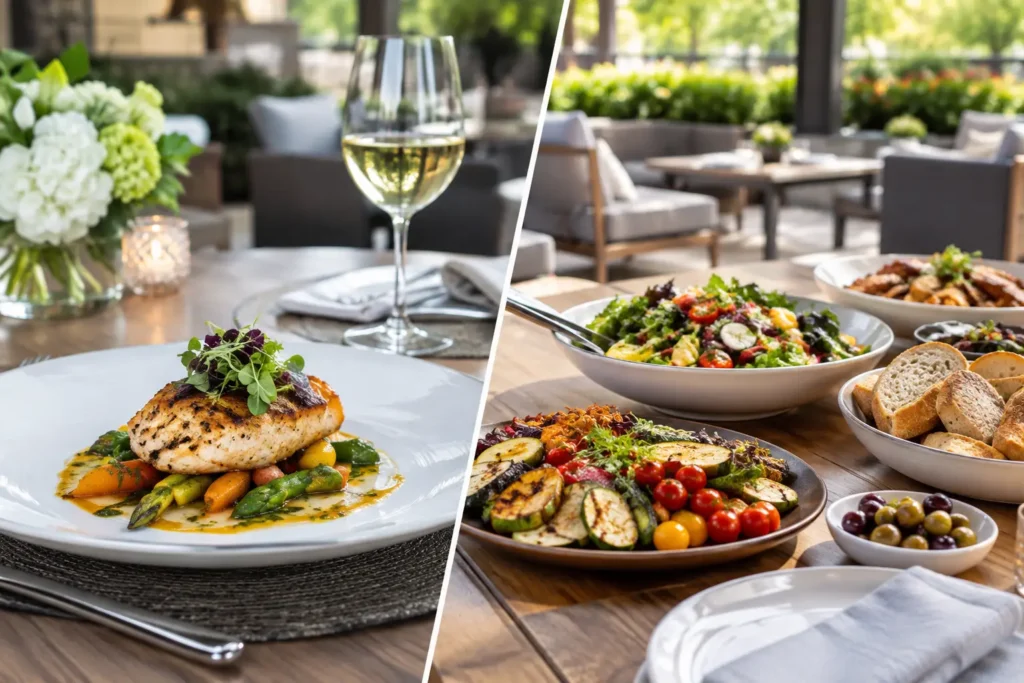
A room can be beautifully lit, the martinis impeccably chilled, and the guest list full of familiar faces. Yet the way dinner arrives at the table can quietly define the entire evening. When weighing plated dinner versus shared plates, the question is not simply what looks best on a menu. It is whether the occasion calls for polished rhythm, lively conversation, or a little of both.
For business entertaining, milestone celebrations, team dinners, and private parties in Boston, service style shapes everything from the first toast to the final glass of wine. The right choice creates an experience that feels effortless to guests and intentional to hosts.
Plated Dinner Versus Shared Plates: The Essential Difference
A plated dinner is built around individual presentation. Each guest receives a composed course, finished by the kitchen and delivered in a coordinated progression. It is graceful, deliberate, and especially well suited to events with speeches, formal timing, or a guest list that includes people who may not know one another well.
Shared plates place dishes in the center of the table for guests to pass, taste, and discuss. The energy is naturally more social. Instead of one private entrée per person, a meal unfolds through a succession of flavors, textures, and small decisions: one more bite of crudo, another pass of roasted vegetables, a favorite dish ordered again for the table.
Neither format is inherently more elevated. A thoughtfully plated filet with a striking wine pairing can feel luxurious. So can a table filled with refined tapas, sparkling glassware, and plates designed to be enjoyed together. The better option depends on the purpose of the gathering and the feeling you want guests to carry with them after the evening ends.
When a Plated Dinner Makes the Strongest Impression
Plated service brings an unmistakable sense of occasion. It gives every guest the same carefully considered culinary moment, allowing the chef’s technique and presentation to take center stage. For hosts, it also offers a welcome degree of structure.
This style is often the best fit for client dinners, leadership gatherings, awards celebrations, and weddings where timing matters. Courses can be paced around welcomes, presentations, and toasts without guests wondering when the next dish will arrive or whether everyone has had enough. A seated dinner also makes it easier to accommodate guests who prefer a defined meal, especially when entrée selections and dietary needs are collected in advance.
There is a visual advantage as well. When a full table is served in close succession, the room has a composed, celebratory energy. Conversations pause as plates arrive, then resume over food that feels personal and complete. It is a dining format that supports a confident host: details are anticipated, and the evening has a clear cadence.
Plated dinners work particularly well when guests are seated for most of the event. If the plan includes a cocktail reception followed by dinner and a formal close, individual courses create an elegant transition from the social opening into the main occasion.
What to consider before choosing plated service
The trade-off is flexibility. Final menu decisions often need to be made earlier, and hosts may need to collect meal preferences before the event. That preparation pays off in consistency, but it can feel less spontaneous than a feast designed to evolve across the table.
Plated service can also create a quieter atmosphere. For some celebrations, that is exactly the point. For a group hoping to mingle, sample widely, and keep the room moving, a more communal format may suit the evening better.
Why Shared Plates Create a More Social Table
Shared plates turn dinner into part of the conversation. Guests reach, recommend, compare, and return for another taste. A table becomes animated not just by what is being served, but by the easy exchange around it.
This makes shared dining a natural match for after-work gatherings, birthday celebrations, reunion dinners, and social events where guests arrive ready to connect. It can be especially effective for groups with varied tastes. One guest may gravitate toward seafood, another toward rich, savory bites, and another toward vegetable-forward dishes. A well-built selection gives everyone more than one moment to enjoy.
There is also a generous visual drama to a shared table. Platters arriving throughout the evening create movement and anticipation. The meal feels abundant without becoming stiff, particularly when paired with a strong wine program or a round of polished cocktails. At Vintage Restaurant & Lounge Boston, that kind of dining can move naturally from dinner into a more spirited lounge atmosphere.
Shared plates are not automatically casual. The details matter: portion planning, pacing, presentation, and service all determine whether the experience feels abundant and elevated rather than crowded or improvised. For a stylish group dinner, a sequence of refined dishes can be every bit as memorable as a traditional three-course menu.
Where shared plates require more planning
The most common mistake is under-ordering. A few small dishes may look like plenty at the start, but larger groups need a deliberate progression of items, including substantial plates and options for different dietary preferences. Guests should never have to compete for the last bite or wonder whether more food is coming.
Shared dining is also less precise for events with strict schedules. If a speech must begin at a specific time or guests need to leave for a show, a plated menu offers clearer control. Communal meals flourish when the evening has room to breathe.
Match the Dining Style to the Moment
Start with the reason people are gathering. A dinner designed to thank a major client calls for a different rhythm than a birthday built around cocktails and late-night conversation. The guest count matters, but the social dynamic matters more.
For a business dinner, consider how much structure will make guests comfortable. If the evening includes senior leaders, a host who wants to guide the conversation, or a formal presentation, plated courses keep the focus where it belongs. Individual service also minimizes logistical distractions, allowing guests to settle into the table and the conversation.
For a group that already knows one another, shared plates can encourage a more relaxed chemistry. The meal provides easy conversation starters and lets guests participate in the experience rather than simply receive it. This is valuable for team celebrations and social gatherings where the goal is to loosen the tie, order another round, and stay awhile.
The room’s setup should guide the choice, too. Long tables and intimate banquettes invite shared dishes because guests can comfortably reach and engage across the table. Larger rounds or more formal place settings may be better served by plated courses. A cocktail-forward reception with high-top tables can benefit from passed bites before dinner, then transition into either format depending on the mood you want to set.
The Case for a Thoughtful Hybrid
The best answer is sometimes neither extreme. A reception with passed appetizers or shared starters can bring immediate energy to the room, while a plated entrée gives the evening a refined center. This approach works well for corporate events and celebrations with guests who have different expectations around formality.
Another option is a plated first course followed by shared accompaniments or desserts. Guests receive the composed presentation of a chef-driven dish, then enjoy the warmth and interaction of passing something around the table. It is an effective way to balance dietary clarity with a sense of abundance.
A hybrid menu should feel purposeful, not like a compromise made at the last minute. Choose the portion of the meal that deserves precision, then let the rest invite discovery. A private-events team can help shape pacing, quantities, and beverage pairings so every transition feels considered.
Details That Make Either Format Feel Exceptional
The menu is only one part of the experience. Great service anticipates the table’s needs without interrupting the mood. Wines should complement the meal and the energy of the occasion, whether that means a polished bottle poured with dinner or a selection that encourages guests to linger over several courses.
Dietary needs deserve the same attention as every other guest’s experience. With a plated dinner, that can mean discreetly tailored courses. With shared plates, it means ensuring there are enough satisfying choices that no one is limited to a side dish. Clear planning allows generosity to feel natural.
Finally, leave room for the evening to evolve. A formal dinner may end with espresso and dessert. A social table may move toward another round of cocktails and a longer night in the lounge. The most successful event does not force one mood from beginning to end. It gives guests a reason to enjoy the next chapter.
Choose the format that makes your guests feel most at ease, then let exceptional food, attentive service, and a beautifully set table do the rest.