
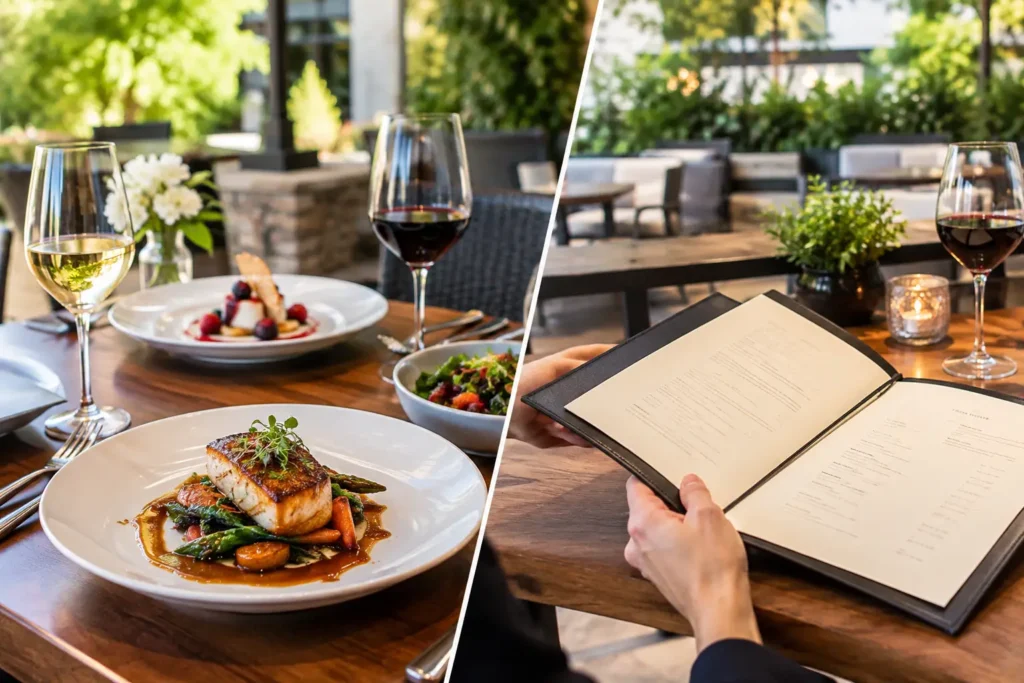
A reservation is only the beginning. Whether you are hosting a client in the Financial District, planning a candlelit date, or gathering friends before cocktails, the choice between prix fixe versus menu shapes the rhythm of the evening. One offers an intentionally paced, chef-led experience; the other gives every guest room to follow their own appetite. Neither is automatically more elegant. The right choice is the one that suits the occasion, the table, and the way you want the night to unfold.
Prix Fixe Versus Menu: The Essential Difference
A prix fixe menu, French for “fixed price,” offers a predetermined number of courses for one set price. Guests might choose among a few options for each course, or the chef may present a fully composed sequence. The format creates a clear culinary arc: perhaps a first course, an entrée, and dessert, with wine pairings available to heighten the experience.
An à la carte menu allows guests to order individual dishes separately. Someone may choose a light plate and a martini while another settles into appetizers, a steak, dessert, and a bottle from the wine list. It is familiar, flexible, and especially appealing when a table has varied tastes or schedules.
The distinction is not simply about price. Prix fixe dining is about curation and pacing. À la carte dining is about choice and spontaneity. A polished restaurant can make either feel special, but each creates a different kind of evening.
When Prix Fixe Sets the Right Tone
Prix fixe works beautifully when the occasion calls for a little ceremony. It removes small decisions from the table and replaces them with a feeling of anticipation. Rather than studying every section of the menu or wondering whether everyone will finish at the same time, guests share a more unified progression through the meal.
For a date night, that rhythm can be particularly appealing. A thoughtfully designed first course arrives as conversation settles in. The entrée feels like a natural second act, followed by dessert when the evening is ready to linger. It is less transactional than placing separate orders and more like being hosted through an experience.
It also suits milestone occasions: anniversaries, birthdays, graduation dinners, and holiday celebrations. A fixed format makes the meal feel intentional before the first glass is poured. Seasonal prix fixe offerings can be especially memorable because they showcase what the kitchen is most excited to serve at that moment, often with ingredients and preparations that may not appear together on the regular menu.
For business dining, the advantages are practical as well as stylish. A prix fixe selection can make planning easier when time is limited or a host needs cost clarity. With a set per-person price, it is easier to estimate the evening before the reservation and avoid the awkward pause when a large table tries to decide how to divide a varied check.
Still, prix fixe is not automatically the best option for every client dinner. If guests have dietary needs, uncertain schedules, or very different appetites, a more open ordering format may show greater consideration. The most polished host thinks about the people at the table before choosing the format.
What Makes a Prix Fixe Feel Worth It
The best prix fixe menus offer more than a bundled price. They reveal the chef’s point of view. Courses should have contrast in texture, temperature, and flavor, building from bright or delicate beginnings toward richer, more satisfying notes. Dessert should feel like a finish, not an afterthought.
Value matters, but it should be judged in context. A prix fixe can offer access to a composed multi-course meal at a more predictable price than ordering each component separately. On the other hand, if you only want one main course before heading to the lounge, ordering à la carte may be the more satisfying value because you are paying for precisely what you want.
Ask whether the menu includes choices, whether supplements apply to premium dishes, and whether beverages, tax, and gratuity are separate. There is nothing unglamorous about knowing the details. It lets you relax once you are seated.
When an À La Carte Menu Wins
An à la carte menu shines when the table wants freedom. It suits an after-work gathering where one person is ready for dinner, another wants a few tapas-style plates, and someone else is stopping in only for a dazzling martini and conversation. There is no need to make the entire group move at one pace.
This format is also ideal for guests who know exactly what they are craving. Perhaps it is a particular seafood dish, a rich steak, a favorite salad, or a selection of shareable plates with wine. À la carte ordering lets personal preference lead the night.
For social groups, this flexibility can create a lively table. Start with a few plates to share, order entrées only if the mood calls for them, then transition to cocktails without the formality of a full structured meal. At a destination that moves naturally from dinner to nightlife, that freedom can be part of the appeal.
À la carte ordering can feel less predictable financially, particularly when bottles of wine, premium cuts, and multiple rounds of drinks enter the conversation. Yet for smaller gatherings, that variability is often a feature rather than a flaw. It gives guests control over how generously or simply they want to dine.
The Case for Shared Plates and Drinks
Not every memorable restaurant evening needs three individual courses. A table of friends may have more fun ordering several dishes for the center, comparing flavors, and choosing a bottle that carries the conversation from the first bite to the final toast. This is where an à la carte menu often feels more social than a prix fixe format.
The same is true for a casual-but-polished business meeting. If the goal is connection rather than a formal hosted dinner, a few refined dishes and an outstanding wine selection can keep the energy relaxed. Guests are free to stay for another round or depart after one, without feeling tied to a predefined meal.
Choosing for Groups, Events, and Dietary Needs
For larger parties, the question becomes less about individual preference and more about the guest experience as a whole. A selected prix fixe menu can help the kitchen serve a group more efficiently and can give event planners a dependable budget. It also reduces ordering delays, which matters when speeches, presentations, or post-dinner plans are on the schedule.
But fixed menus need thoughtful construction. Offering a choice between at least a few entrée styles can make guests feel considered, while clear advance communication about vegetarian, vegan, gluten-sensitive, and allergy-related needs is essential. A gracious restaurant can often accommodate requests with notice, but guests should never assume a substitution is possible without asking.
For an intimate group with widely different preferences, à la carte may be easier. For a celebration with a set headcount and a defined agenda, prix fixe is usually the cleaner choice. Private events often land somewhere in the middle: a tailored menu with a few selections, passed appetizers, and beverages chosen to match the occasion.
At Vintage Restaurant & Lounge Boston, that distinction matters because a table may begin with chef-driven dinner and end in the lounge over designer martinis. A prix fixe dinner can create a poised opening for a celebration, while an à la carte approach can keep an after-work gathering fluid from tapas through late-night drinks.
A Few Questions to Ask Before You Reserve
Before selecting a format, consider the purpose of the reservation. Is this a client dinner where predictability and prompt service matter? A first date where a composed meal creates atmosphere? A birthday group with varied budgets and dietary needs? Or a flexible evening built around cocktails, conversation, and whatever looks irresistible?
Then consider time. Prix fixe works best when everyone can arrive and dine on a similar schedule. À la carte is more forgiving when guests may join late, leave early, or prefer to make a meal out of drinks and small plates. Finally, think about the host’s comfort level. A fixed menu makes spending easier to anticipate; à la carte allows guests more control but may require a clearer plan for the check.
The most memorable choice is rarely about following a rule. Choose the prix fixe when you want the evening to feel composed, celebratory, and guided by the kitchen. Choose the menu when you want it to feel open, personal, and ready to go wherever the conversation leads. Then make the reservation, dress for the occasion, and leave enough time for one more glass of something exceptional.