
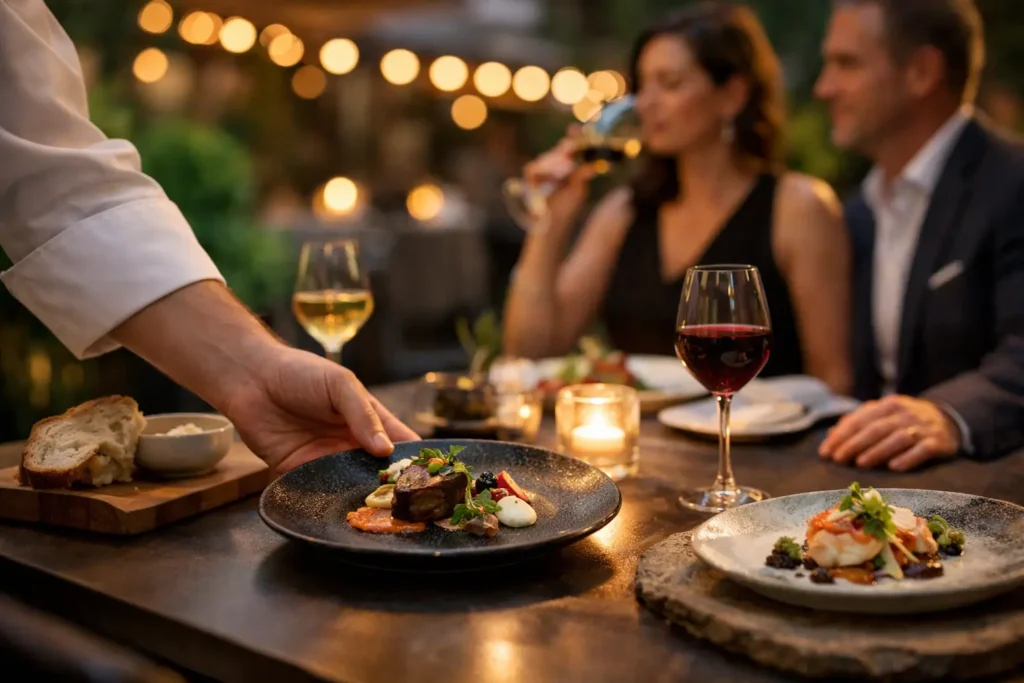
A chef tasting menu is not simply dinner with more courses. It is an evening with a point of view: the first pour arrives, the room settles into its glow, and each plate gives the next one a reason to exist. For a client dinner, an anniversary, or a table of friends looking for something beyond the usual reservation, chef tasting menus bring focus, surprise, and a welcome sense of occasion.
The pleasure is in surrendering the small decisions. Rather than weighing every entrée against every side, guests follow a progression designed by the kitchen – one that considers season, texture, temperature, and the lingering finish of a great glass of wine. Done well, it feels indulgent without becoming stiff, polished without losing its pulse.
What Makes Chef Tasting Menus Different
An à la carte dinner begins with choice. A tasting menu begins with intention. The chef selects a series of courses that are meant to be enjoyed in a particular order, often beginning with something bright and delicate before moving toward deeper, richer flavors. The result is less like a collection of dishes and more like a composed evening.
That sequence matters. A chilled seafood course might sharpen the palate with citrus and herbs. A warm pasta or vegetable course can introduce silkier texture and savory depth. Then comes the main event: perhaps a beautifully prepared cut of meat, pristine fish, or a seasonal centerpiece that gives the meal its most dramatic note. Dessert does not merely end the dinner. It resets the mood, often with contrast – something floral, bitter, creamy, or crisp.
The Chef Sets the Pace
There is a distinct confidence in letting an accomplished kitchen lead. Chef tasting menus showcase technique, but they also reveal judgment: when to use restraint, when to bring richness forward, and when a single exceptional ingredient needs very little attention.
The strongest menus avoid excess for its own sake. More courses do not automatically make for a better experience. Five thoughtful courses can feel complete, while ten can feel overly ambitious if the pacing is off. A memorable tasting is generous, not exhausting.
At Vintage Restaurant & Lounge Boston, an award-winning executive chef and an outstanding wine program create the kind of setting where considered food and a celebratory night out naturally belong together. The atmosphere matters as much as the plate: leather-clad comfort, a refined table, and the possibility of a dazzling martini after dinner give the evening room to continue.
When a Tasting Menu Is the Right Choice
Tasting menus are especially well suited to occasions when dinner is the destination. For a date night, they replace the distraction of constant decision-making with shared anticipation. For a birthday or milestone, they make the table feel immediately more festive. For hosts entertaining clients, they offer a polished format that keeps attention on the conversation rather than the menu debate.
They also work beautifully for diners who are curious but not necessarily adventurous in every direction. A well-designed menu introduces unfamiliar ingredients in approachable ways. You may encounter a preparation you would not have ordered on your own, but within a course that feels balanced and inviting rather than intimidating.
There are times when à la carte is the better call. If your group has very different appetites, needs maximum flexibility, or plans to arrive late and head straight into cocktails, sharing plates and individual selections may create a more relaxed rhythm. A tasting menu asks for time, attention, and a willingness to follow the chef’s lead. That is precisely its appeal, but it is worth choosing the experience that suits the night.
The Details That Shape a Great Tasting Experience
A polished tasting menu is felt in the transitions. Service should be present but never intrusive, explaining a dish clearly and allowing guests to enjoy it without turning every course into a lecture. Courses should arrive with enough space for conversation, yet not so much space that momentum fades.
Timing Is Part of the Luxury
Plan for a tasting menu to take longer than a standard dinner. Depending on the number of courses and whether wine pairings are included, the experience can easily become a two- to three-hour occasion. That is not a drawback when the evening has been planned accordingly. It is the invitation to linger, to notice the details, and to let the night unfold beyond the usual rush between meetings and obligations.
An earlier reservation is often ideal for a tasting menu before a theater performance or a carefully timed evening. For a leisurely celebration, choose a seating that allows the table to relax into each course and perhaps continue into the lounge afterward. The best reservation time depends less on etiquette than on the kind of night you want to have.
Dietary Communication Is Essential
The chef can only tailor an experience around information the restaurant receives. Share allergies, dietary restrictions, and strong aversions when making the reservation, not after the first course arrives. A shellfish allergy, vegetarian preference, gluten sensitivity, or pregnancy-related restriction may require advance planning, especially when a menu is built around a precise progression.
There is a trade-off here. The more significant the restrictions, the more a traditional tasting menu may need adjustment. A skilled kitchen can often accommodate, but substitutions can change the original arc of the meal. Being clear and early gives the culinary team the best opportunity to create something that feels intentional rather than improvised.
Wine Pairings, Cocktails, and the Art of Contrast
Wine pairing is often the most natural companion to a chef-led menu because it extends the chef’s sequence into the glass. A bright white can lift a crudo course; a textured, mineral-driven wine can meet a buttery preparation without overwhelming it; a nuanced red can bring warmth to a deeply savory main course. The right pairing does not simply match flavors. It changes how each bite lands.
A full pairing is not the only option. Some guests prefer one exceptional bottle that can travel through several courses, particularly when the menu includes a range of styles but stays within a cohesive flavor profile. Others may begin with Champagne or a chilled martini, move to wine with the savory courses, and finish with an amaro or dessert pour. There is no single correct way to drink through a tasting menu, only a question of balance and pace.
Cocktails can be spectacular at the beginning or end of the meal, but heavily sweet, intensely smoky, or very high-proof drinks may compete with subtle early courses. If cocktails are part of the plan, consider enjoying them in the lounge before dinner or saving a nightcap for afterward. This lets the tasting menu remain the center of attention while still making room for the social energy of the evening.
How to Arrive Ready to Enjoy It
A tasting menu rewards a little preparation. Do not arrive starving after skipping every meal, but avoid turning up overly full from a late lunch. Dress for the room and the occasion, then let comfort count too. Fine dining should feel composed, not constrained.
At the table, give each course a moment before reaching for the next sip or returning to a work conversation. Ask questions if a technique or ingredient interests you. Notice what surprises you. The point is not to identify every note with expert precision; it is to be fully present for a meal designed with care.
For groups, a tasting menu is usually most successful when everyone opts in. A shared format keeps the table moving together and makes the experience more social. If one guest prefers à la carte dining, ask the restaurant in advance whether the two styles can be accommodated comfortably. Policies vary, and a clear plan protects the flow of service for everyone.
Choosing a Chef Tasting Menu for Your Occasion
Before booking, consider what you want the evening to say. A short seasonal tasting may be perfect for a sophisticated weeknight dinner. A longer menu with pairings suits a major celebration or an important client occasion. The setting should support the food, with attentive service, a drinks list worth discussing, and enough atmosphere to make the final course feel like a beginning rather than an ending.
The right tasting menu leaves guests with more than a favorite dish. It creates the feeling of having spent the evening exactly where they meant to be. Reserve the time, bring an appetite for discovery, and let a well-composed table carry the night somewhere memorable.