
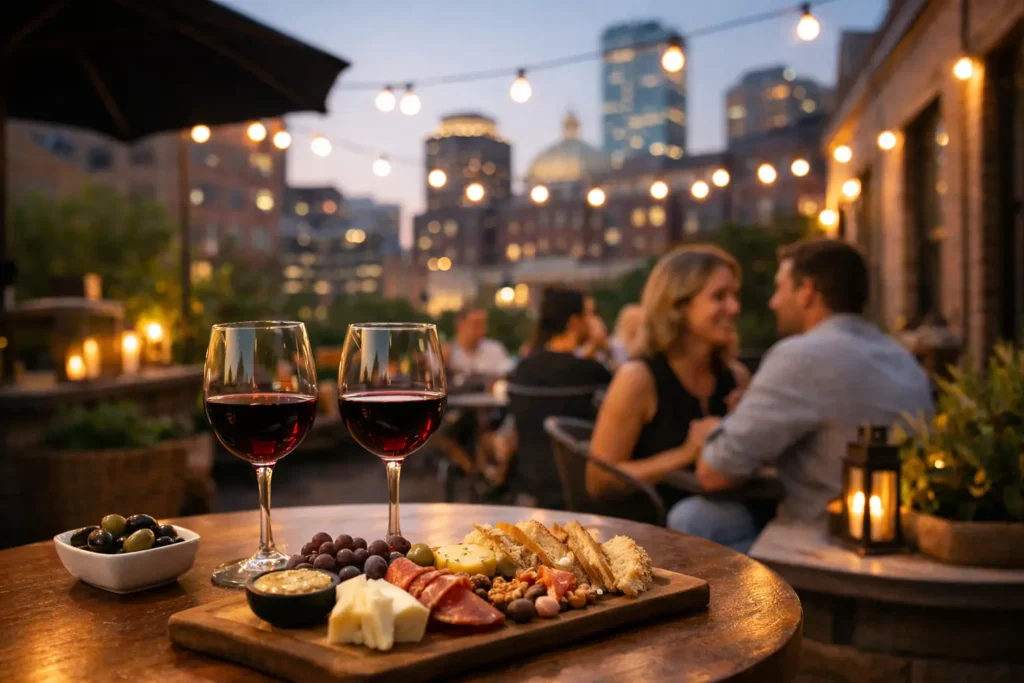
The best nights out rarely begin with a rigid plan. They begin with a great table, a bottle worth discussing, and a room that makes everyone want to stay for one more course. That is the lasting appeal of wine bars: they turn an ordinary drink into an occasion, with enough polish for a client dinner and enough energy for a spontaneous late-night gathering.
For Boston professionals, that balance matters. A venue has to work around the rhythm of the city – the quick catch-up after work, the date that deserves more than a crowded cocktail bar, the team dinner that needs to feel considered without becoming overly formal. A thoughtful wine-focused setting meets those moments with grace.
Wine Bars Are Built for Conversation
A great wine bar is not simply a place with more bottles on the list. It is a place designed around pace. The lighting is warm rather than glaring. The music has presence without competing with the person across the table. Service is attentive, yet never hurries a conversation that is just beginning to get interesting.
That atmosphere changes the entire experience. Beer halls can be lively, and cocktail bars can be dramatic, but both often ask guests to match their tempo. Wine invites a more flexible kind of evening. Start with a crisp glass and a few shareable plates, then settle into a red with dinner. Or open a bottle after a meeting and let the night take its own direction.
This is why wine bars are especially suited to dates and small groups. A bottle creates a natural centerpiece. It gives guests something to choose together, taste together, and return to between stories. Even when no one at the table considers themselves a wine expert, the ritual feels generous and social.
A Curated Wine List Makes the Difference
The number of bottles on a list matters less than the judgment behind them. A serious program should offer familiar regions and grapes alongside discoveries that reward curiosity. It should make room for a bright, mineral-driven white before dinner, a food-friendly red for the table, and a celebratory bottle for a milestone worth marking.
Balance matters, too. Guests should be able to order a dependable favorite without feeling as though they are playing it safe. At the same time, those who want to venture beyond Cabernet or Pinot Grigio should find staff who can make a confident recommendation based on flavor, mood, and menu rather than a rehearsed sales pitch.
The ideal glass is personal. Someone ordering oysters may want something crisp and saline; someone settling into lamb or steak may prefer depth, structure, and a longer finish. A knowledgeable server can narrow the choices without making the moment feel academic. That is hospitality at its most appealing: informed, relaxed, and genuinely tailored.
By the Glass Should Still Feel Special
A strong by-the-glass selection is essential because not every evening calls for a full bottle. One guest may want Champagne while another wants a light Italian red, and neither should have to compromise. The trade-off is freshness and quality. A long list of neglected pours is far less compelling than a concise selection poured with care.
The best programs treat every glass as an introduction to the cellar. It should stand on its own with dinner, but also make guests curious about what else the list has to offer.
Food Gives Wine a Reason to Linger
Wine is at its most expressive alongside food. This is where a chef-driven menu and an outstanding drinks list become more than separate attractions. They create an evening with shape: sparkling wine with a first bite, a textured white with seafood, a fuller red with a rich entrée, and perhaps something sweet or fortified to finish.
Small plates are particularly effective for groups because they keep the table active. A selection of tapas-style dishes lets guests explore different pairings without committing to one flavor direction. Salty, savory, bright, creamy, spicy – each element can bring out a different side of the wine.
Still, sharing plates are not the only answer. A polished wine destination should be able to support a complete dinner when the occasion calls for it. A client meeting may need the ease of a composed entrée and a bottle selected to complement it. A celebratory date may deserve several courses, a lingering dessert, and no pressure to move along just as the evening reaches its best point.
The Right Room Carries the Occasion
A wine list cannot compensate for a room that feels anonymous. Guests remember the texture of an evening: the glow against a glass, the comfort of the seating, the quiet confidence of the service, and the feeling that the table was waiting for them.
In a city as social and business-driven as Boston, ambiance also has practical value. The right space can transition effortlessly from a Financial District dinner reservation to drinks with colleagues, from an intimate date night to a birthday gathering. It gives hosts confidence that they can bring different personalities into one room and still make everyone feel well looked after.
At Vintage Restaurant & Lounge Boston, that versatility is part of the experience. Leather-clad surroundings, chef-led dining, a Wine Spectator-recognized list, and a stylish lounge sensibility offer guests more than a single-purpose reservation. The evening can begin with dinner, continue with wine and conversation, and end with a dazzling martini if the mood shifts.
Wine Does Not Have to Be the Only Drink
The strongest wine bars understand that a group rarely orders in perfect unison. One person may be eager to explore a Burgundy, another may prefer a classic cocktail, and someone else may want sparkling water with dinner. A sophisticated beverage program accommodates all three without diluting its point of view.
This is an important distinction. A wine-led venue should celebrate the bottle without becoming precious about it. Guests come to feel at ease, not to pass a test. When the room offers exceptional wine alongside well-made cocktails and thoughtful nonalcoholic options, every guest has a place at the table.
How to Choose a Wine Bar for the Night You Want
Before making a reservation, consider what the evening needs to accomplish. If the goal is a quick drink before an event, a lively bar with a focused by-the-glass list may be enough. If it is a client dinner or a special date, look for a kitchen capable of carrying the meal, seating that encourages privacy, and a wine team that can guide a bottle selection with discretion.
For groups, the details become even more important. Can the menu support sharing? Is there enough range for varied tastes? Will the space feel festive without forcing guests to shout? A restaurant with private-event expertise can be the smarter choice for celebrations, especially when timing, service, and menu coordination matter as much as the first pour.
Price should be considered in context. A lower-priced glass is not always better value if the setting, food, and service leave the night feeling forgettable. Conversely, a special bottle may be well worth it when it becomes part of a dinner people discuss for weeks. The right choice depends on the occasion, the company, and whether the venue knows how to make both feel elevated.
The next time a calendar fills with meetings, deadlines, and standard plans, reserve a table somewhere that makes room for pleasure. Choose the wine by the mood, order the dish that calls to you, and give the conversation enough time to become the part of the evening everyone remembers.