
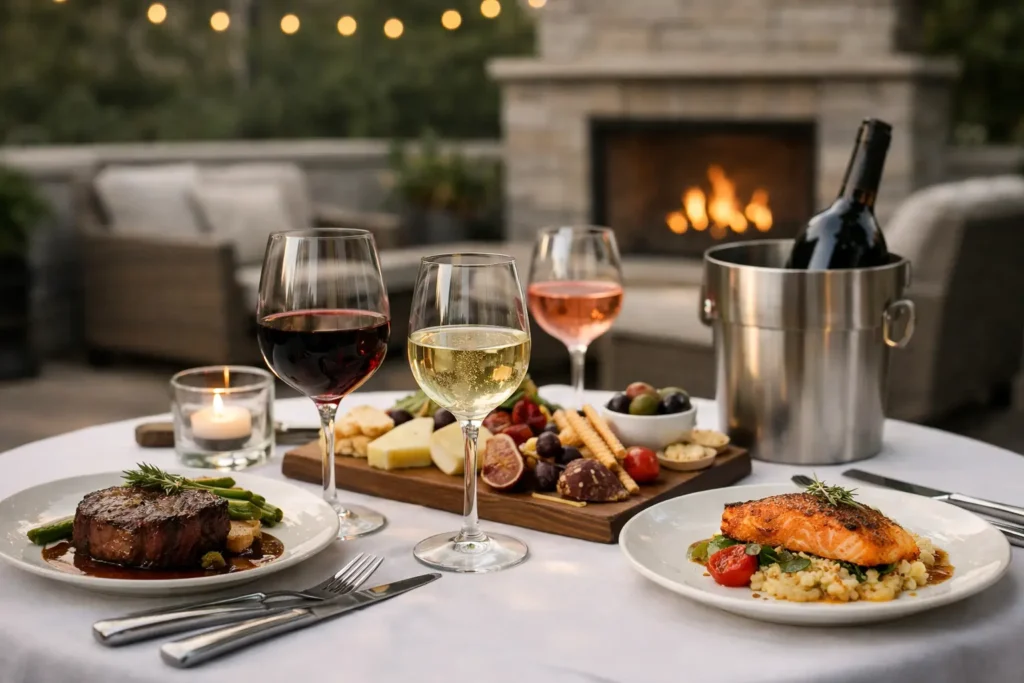
A great dinner can turn on a single pour. The right glass gives a rich entrée lift, makes a bright sauce feel more alive, and carries conversation well past the last course. This guide to wine pairing dinner is designed for hosts, business diners, and celebrants who want the table to feel considered without making the evening feel overly formal.
Wine pairing is not about finding one supposedly perfect answer. It is about creating balance between the food, the wine, and the occasion. A quiet date night calls for a different bottle than a client dinner, just as a tapas-style spread needs a different approach than a seated steakhouse meal. Start with flavor, then leave room for mood.
Begin with the Plate, Not the Bottle
The most useful rule of wine pairing is simple: match a wine to the dominant flavor of the dish, not merely its main protein. Chicken can be roasted with herbs, glazed with citrus, or served in a creamy mushroom sauce. Those preparations lead to three very different wines.
Consider weight first. Delicate seafood and crisp salads generally favor lighter-bodied wines, while slow-braised meats, aged cheeses, and richly sauced dishes can handle more structure. Then look at the elements that change everything: acidity, salt, sweetness, spice, smoke, and fat.
Acid is one of the most generous qualities in wine. A lively Sauvignon Blanc or dry Riesling can refresh the palate beside briny oysters, lemony crudo, or a creamy seafood dish. It can also make a vinaigrette-forward salad easier to enjoy. If a dish is bright with tomato, citrus, pickled vegetables, or vinegar, choose a wine with enough freshness to keep pace.
Fat, meanwhile, often welcomes tannin or acidity. A structured Cabernet Sauvignon can stand up beautifully to a well-marbled steak because the wine’s tannins cut through the richness. For buttery lobster or a velvety risotto, a Chardonnay with balanced oak and acidity can bring shape without overpowering the dish.
A Guide to Wine Pairing Dinner by Flavor
Rather than memorizing rigid protein-to-wine rules, think in flavor families. This makes wine selection more intuitive when a menu includes seasonal ingredients, global influences, or chef-driven preparations.
Bright, Briny, and Citrus-Forward Dishes
Raw bar selections, grilled fish, ceviche, and dishes finished with lemon or herbs call for precision. Sparkling wine is especially versatile here. Its bubbles cleanse the palate, while its acidity heightens fresh flavors. Brut Champagne, traditional-method sparkling wine, Albariño, Muscadet, and Sauvignon Blanc are all elegant directions to consider.
For a first course that needs to feel celebratory, sparkling wine is difficult to improve upon. It welcomes guests, works with salty bites, and keeps the table light before a more substantial main course arrives.
Creamy, Buttery, and Silky Dishes
Cream sauces, lobster, scallops, roast chicken, and mushroom pasta need a wine with texture. Chardonnay is the classic choice, but style matters. A leaner, mineral-driven Chardonnay can preserve freshness; a fuller, oak-influenced expression can echo the dish’s richness.
White Burgundy, Viognier, and a well-balanced Pinot Gris can also be compelling. The goal is not to stack richness upon richness until the pairing feels heavy. Look for acidity underneath the wine’s generous texture. That tension is what keeps each bite inviting.
Savory Meats and Charred Flavors
For steak, lamb, duck, and dishes touched by the grill, red wine often provides the most natural complement. Cabernet Sauvignon offers depth and tannic structure for a classic steak dinner. Syrah brings pepper, smoke, and dark fruit that can be striking with lamb or spice-rubbed meats. Malbec is generous and approachable, especially with charred edges and herbaceous sauces.
Pinot Noir deserves a place at this table as well. It is lighter in body than Cabernet but full of savory complexity, making it an excellent choice for duck, pork, salmon, mushrooms, and truffle. When a menu moves between land and sea, Pinot Noir can be the graceful compromise.
Spicy, Sweet, and Globally Inspired Plates
Heat changes the equation. High-alcohol, heavily tannic red wines can make spice feel hotter, so choose wines with vibrant fruit, lower alcohol, or a touch of residual sugar. Off-dry Riesling, Gewürztraminer, Chenin Blanc, and sparkling rosé can be especially flattering with chili, ginger, aromatic herbs, and sweet-savory glazes.
For tapas and shareable plates, versatility matters more than precision. A dry rosé can move from charcuterie to grilled vegetables to shrimp with ease. A chilled, lighter red such as Beaujolais can be equally social, especially when the table includes cured meats, roasted peppers, and smaller bites meant for passing.
Let Sauce Lead the Decision
A common pairing mistake is ordering wine for the entrée and overlooking the sauce. A tender filet with peppercorn cream asks for something different than that same filet served with chimichurri. A tomato-based sauce often appreciates Italian reds with energetic acidity, such as Sangiovese or Barbera. A mushroom sauce may welcome earthy Pinot Noir, while a fruit glaze can be lovely with a plush Merlot or fruit-forward Zinfandel.
This is also where a thoughtful server or sommelier earns their place. Describe the sauce, the seasoning, and how hungry the table is for a bold wine. Those details matter more than a broad request for “a red with steak.”
Pair for the Pace of the Evening
Wine should support the rhythm of dinner. For an after-work gathering in Boston’s Financial District, begin with a sparkling wine, crisp white, or martini before moving into the dinner pairing. The opening drink creates energy; the wine at the table creates focus.
For a client dinner, a bottle with broad appeal is often the most polished choice. A refined Chardonnay, Pinot Noir, or medium-bodied Italian red gives the group flexibility without forcing anyone into an extreme style. For a date night, choose with a little more personality. An aromatic white, elegant Champagne, or memorable older-vine red can make the selection feel intentional.
At Vintage Restaurant & Lounge Boston, an outstanding wine and drinks list offers the kind of range that lets dinner shift naturally from polished conversation to a more spirited evening. That flexibility is valuable when the occasion includes both a serious meal and a late-night lounge atmosphere.
Plan One Wine or Build a Progression
A single bottle is often the right answer for a smaller table or a menu built around one main course. Choose the wine that best suits the most substantial dish, then let appetizers be a pleasant prelude rather than a technical pairing exercise.
For a longer dinner, a progression creates a more memorable experience. Start with sparkling wine or a light, high-acid white for appetizers. Move to a textured white or versatile red with the entrée. Finish with dessert wine only when the dessert is genuinely sweet enough to justify it.
The essential rule for dessert is that the wine should be at least as sweet as the dish. A dry red beside chocolate cake can taste sharp and thin. A late-harvest wine, tawny Port, Sauternes-style dessert wine, or rich Madeira has the sweetness and concentration to meet chocolate, caramel, fruit tarts, and blue cheese on their own terms.
Serve It with Confidence
Serving temperature can quietly make or break a bottle. Whites and sparkling wines should be chilled but not frozen into numbness. Fuller whites benefit from a few minutes out of the refrigerator, allowing texture and aroma to emerge. Light reds are often better with a brief chill, while powerful reds should be cool room temperature, not warm from sitting beside a radiator.
Decanting is useful for young, full-bodied reds, particularly Cabernet Sauvignon, Nebbiolo, and Syrah. It softens the first impression and opens the wine’s aromatics. But decanting is not mandatory for every bottle. A graceful Pinot Noir or mature wine may need only a careful pour.
Most of all, do not apologize for choosing a wine you enjoy. Classic pairings are reliable because they work, but pleasure remains the final measure. If your guests love a favorite Champagne with dinner, pour it. The most stylish table is one where the wine feels generous, the food feels alive, and no one is checking the rules before taking the next sip.