
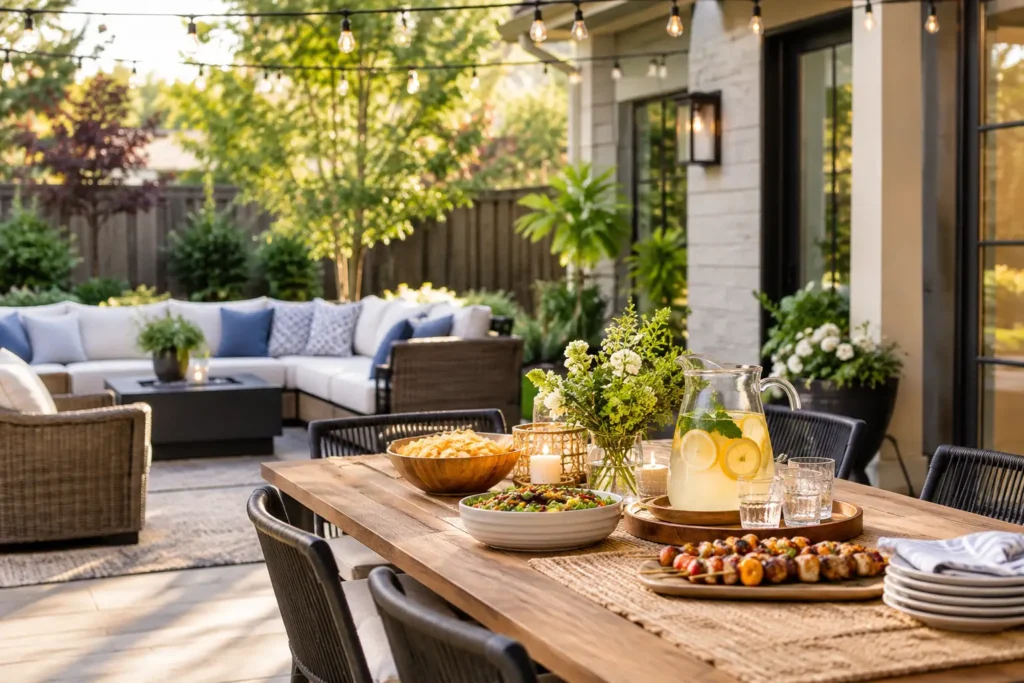
A great patio gathering has a particular kind of energy: the first chilled cocktail arriving at the table, conversation warming as the city lights come on, and a menu that invites guests to linger. Planning a patio party is less about filling every minute and more about setting a polished scene where everything feels easy, even when there is plenty happening behind the scenes.
For Boston hosts, that starts with respecting the season. A beautiful outdoor event can feel relaxed and spontaneous, but its success usually comes down to thoughtful timing, a flexible food and drinks plan, and a space designed for the way people actually socialize.
Start With the Occasion, Not the Guest Count
Before choosing cocktails or sending an invitation, decide what the party is meant to feel like. A client appreciation gathering calls for a different pace than a birthday toast, an engagement celebration, or a long-overdue reunion with friends. The occasion informs everything from arrival time to music, service style, and how formal the menu should be.
Guest count matters, of course, but it should not be the only measure. A group of 16 colleagues may need room for easy introductions and standing conversation. A party of 30 close friends may be happiest with shared plates and a more animated, lounge-like rhythm. Think about whether guests will arrive together, circulate in waves after work, or settle in for a seated meal. That detail helps determine the most comfortable format.
For a polished outdoor event, avoid trying to make one gathering do every job. A dinner party can include drinks, but it should still give guests a clear place to sit and enjoy the meal. A cocktail reception can offer substantial food, but it needs enough open space that nobody is balancing a martini and a plate for the entire evening.
Choose a Time That Works With the Patio
The best patio parties work with the light, temperature, and neighborhood cadence rather than against them. Early evening is often ideal: guests arrive in daylight, settle into the atmosphere, and watch the setting become more intimate as evening takes over. For business groups in the Financial District, a weekday gathering that begins just after the workday can turn a routine calendar date into an occasion.
A weekend lunch or late afternoon celebration offers a brighter, more relaxed mood. It can be particularly effective for showers, family celebrations, and gatherings where guests prefer wine and conversation over a late-night scene. The trade-off is that midday sun and warmer temperatures call for shade, hydration, and a menu that stays fresh.
Boston weather deserves a role in the plan. Even a warm day can cool quickly after sunset, while rain can appear with little ceremony. Ask about covered options, indoor accommodations, and the decision point for moving the event. A backup plan is not a compromise. It is what allows the host to stay composed when the forecast changes.
Let the Invitation Set Expectations
A concise invitation prevents awkward guesswork. Share the start and end time, dress cue, and the general style of the event. “Cocktails and shared plates on the patio” signals something very different from “seated dinner and wine.” If the event will continue indoors after a certain hour, say so. Guests appreciate clarity, and it makes the evening feel intentionally designed.
Build the Menu Around Conversation
Outdoor entertaining favors food that is expressive without being fussy. The most successful patio menus offer variety, color, and enough substance to keep the evening going. Shared plates are especially effective because they create a natural reason for guests to interact. A table reaching for the same crisp appetizer or passing a warm, chef-driven dish feels more convivial than a room silently waiting for individual courses.
That does not mean every event needs tapas-style service. For a smaller, more formal celebration, a plated dinner can feel elegant and unhurried. For larger groups, a reception format with composed small plates may make more sense. The right choice depends on the degree of movement you want in the room and how much time guests have.
Aim for contrast. Include a few lighter selections, one or two richer dishes, and options that accommodate common dietary needs without making anyone feel like an afterthought. A thoughtful menu should be generous, not overwhelming. Too many choices can slow down service and dilute the sense of occasion.
If drinks are central to the party, do not treat food as a decorative side note. Salty, bright, savory dishes give a wine or cocktail program something to play against. The goal is a menu that makes the next glass feel even more appealing while keeping guests comfortable throughout the event.
Make the Drinks List Feel Curated
A full bar is not always a better bar. For a group gathering, a focused selection usually creates a more refined experience and keeps the pace lively. Consider one welcome cocktail, a small choice of signature drinks, a crisp white, a versatile red, sparkling wine, and thoughtful nonalcoholic options. It feels generous while giving the event a clear point of view.
A dazzling martini may be exactly right for a sophisticated evening crowd, while a sparkling aperitif can set a lighter tone for a sunset reception. Wine deserves the same consideration. A versatile bottle that works across several shared dishes is often more useful than an overly ambitious list that leaves guests second-guessing every pour.
It also helps to decide how the bar will operate. Hosted drinks offer a gracious, uncomplicated start. A limited hosted selection can keep the experience elevated while providing more control over the budget. For a longer event, a hosted first round followed by individual tabs may be appropriate, depending on the group and the purpose of the gathering.
Whatever the arrangement, make water and nonalcoholic drinks visible and easy to order. Good hosting means every guest has something special in hand.
Design for Comfort After Sunset
The details guests remember are often physical: a seat that feels inviting, enough room to set down a glass, attentive service at the right moment, and the welcome relief of warmth when the temperature dips. Outdoor events should be comfortable before they are photogenic.
Ask about the patio layout, lighting, heat sources, and noise level. A corner table may be perfect for an intimate group but too separated for a networking event. A central arrangement can create energy but may make conversation harder during a busy service. There is no universally right choice. It depends on whether your priority is privacy, visibility, or movement.
For celebrations that run later, lighting should flatter the mood without making the table difficult to navigate. Candles, ambient fixtures, and the glow of the surrounding city can create a more sensual atmosphere than elaborate décor. Let the setting do some of the work.
At Vintage Restaurant & Lounge Boston, an outdoor gathering can carry that polished transition from dinner into drinks – an especially appealing option when the group wants an occasion that feels more memorable than a standard reservation.
Give the Evening a Natural Shape
The best parties have a rhythm, even when nobody notices it. Give guests a clear welcome moment, whether that is a first cocktail, a toast, or a distinctive opening dish. After that, let the middle of the evening breathe. This is when shared plates arrive, introductions happen, and guests settle into real conversation.
If there is a speech, cake, or special announcement, schedule it before the group becomes too dispersed. Keep it brief and warm. A patio party is not a board meeting, and guests should not feel as though they are waiting for the program to resume.
For corporate groups, a short welcome from the host is often enough. For personal celebrations, one meaningful toast can land better than several. The more effortless the evening appears, the more room there is for genuine connection.
Confirm the Details That Protect the Experience
A few practical questions can prevent most last-minute stress. Confirm the final guest count, dietary requirements, weather policy, arrival instructions, menu timing, and any minimums or service charges well before the event. If guests are bringing a cake, décor, or a special bottle, clarify the venue policy in advance.
It is also wise to designate one point person. That person can answer a call, greet late arrivals, or make a quick decision without pulling the host away from the table. For a work event, it might be an office coordinator. For a celebration, it may be a trusted friend who knows the plan.
The goal is not to control every moment. It is to remove the small points of friction that keep a host from enjoying their own party.
A memorable patio party leaves guests with more than a good meal and a few photos. It gives them the feeling that the evening had nowhere else to be – a beautiful table, a well-chosen glass, and just enough time to stay for one more round.