
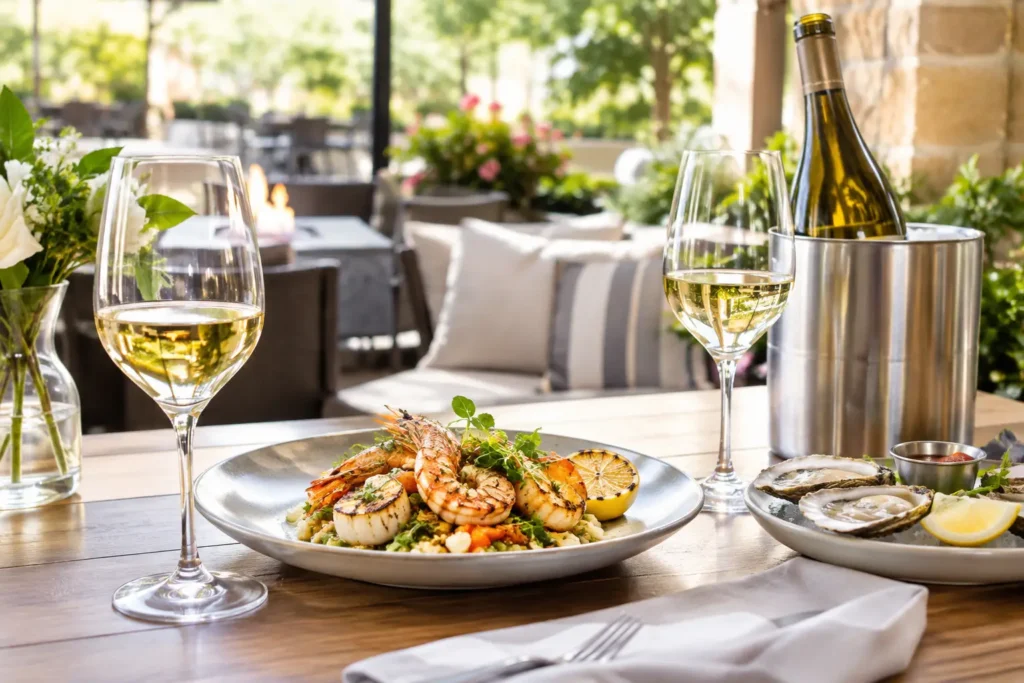
How to Pair Wine with Seafood
A briny oyster and a chilled glass of sparkling wine can make a business dinner feel like an occasion. A buttery lobster, meanwhile, asks for something with more texture and presence. That is the pleasure of learning how to pair wine with seafood: the right bottle does not merely accompany the plate. It sharpens the flavors, lifts the mood, and gives the table something worth talking about.
The old rule – white wine with fish, red wine with meat – is a useful starting point, not a final answer. Seafood can be delicate or deeply rich, raw or charred, simply dressed or alive with spice. The sauce, the cooking method, and even the occasion matter as much as the species on the menu.
Start with Weight, Texture, and Preparation
Think of wine and seafood as two partners sharing the same stage. A light, clean fish such as sole, fluke, or cod can be overwhelmed by an oaky, high-alcohol wine. It is at its best with a crisp white that has bright acidity and a restrained profile. Pinot Grigio, Muscadet, Albariño, and dry Sauvignon Blanc are natural choices, especially when the dish features lemon, herbs, or a clean olive oil finish.
Richer seafood needs more from the glass. Lobster, scallops, crab, and halibut have a sweeter, fuller character, particularly when roasted, sautéed, or finished with brown butter. Chardonnay can be beautiful here, but style matters. Choose a balanced, fresh Chardonnay with enough acidity to cut through butter rather than one dominated by heavy oak. White Burgundy, quality domestic Chardonnay, and dry Chenin Blanc all bring a more luxurious texture without dulling the dish.
Then consider how the kitchen treats the seafood. Raw preparations favor energy and precision. Grilled fish welcomes more body and a whisper of smoke. Fried seafood needs acidity to reset the palate after every crisp bite. A creamy sauce calls for a wine with similar weight but enough lift to keep the pairing from becoming too rich.
Pairing Wine with Raw Seafood and Shellfish
Oysters are one of the clearest expressions of place on a menu. Their salinity, minerality, and cool ocean finish call for wines that feel equally brisk. Muscadet is a classic for good reason: it is dry, saline, and quietly refreshing. Chablis, Champagne, Cava, and dry sparkling wines also have the acidity and fine bubbles that make oysters taste even cleaner.
For crudo, ceviche, and tuna tartare, look for wines with vivid citrus and little to no oak. Albariño has a beautiful affinity for lime, cilantro, and fresh seafood. Vermentino works well with Mediterranean flavors, while dry Riesling is especially compelling when the dish has chili, ginger, or a touch of sweetness.
Shrimp cocktail is more versatile than it first appears. The shrimp itself is mild and sweet, but cocktail sauce brings tomato, horseradish, and spice. Sparkling wine is a polished choice because its bubbles refresh the palate and its acidity keeps pace with the sauce. A zesty Sauvignon Blanc also works well, particularly if the spice level is restrained.
The Best Wines for Lobster, Crab, and Scallops
Lobster deserves a wine that feels celebratory. If it is served chilled with drawn butter, reach for Champagne or a serious traditional-method sparkling wine. The combination is bright, luxurious, and ideal for a date night or a toast-worthy dinner. With lobster ravioli, bisque, or a richer preparation, a layered Chardonnay brings the roundness the dish needs.
Crab is sweeter and more delicate than lobster, so avoid wines that are overly woody or too alcoholic. Dry Chenin Blanc, unoaked Chardonnay, Pinot Blanc, or a mineral-driven white Burgundy can complement crab cakes, crab salad, or simply prepared king crab. If the plate includes a sharp remoulade or citrus aioli, let acidity lead the decision.
Seared scallops offer a beautiful contrast of caramelized exterior and tender interior. Their sweetness pairs well with Chardonnay, but they are equally good with dry Riesling or Grüner Veltliner. For scallops with corn, cauliflower purée, or a beurre blanc, choose a white with a creamy feel. For scallops with peas, herbs, or a citrus vinaigrette, choose something leaner and brighter.
Fish Pairings That Go Beyond White Wine
Salmon is where the white-wine-only rule begins to loosen. Its natural richness can handle a fuller white such as Chardonnay, Viognier, or white Rhône blend. But salmon can also be excellent with a light, low-tannin red. Pinot Noir is the classic choice, particularly with roasted or grilled salmon, mushrooms, lentils, or a red wine reduction.
The key is tannin. Big, drying reds can make fish taste metallic or bitter, especially when the seafood is delicate. If you prefer red wine, select bottles with bright fruit, moderate alcohol, and soft tannins. Gamay, Pinot Noir, and a lightly chilled, elegant Frappato can be surprisingly graceful with salmon, tuna, swordfish, or grilled octopus.
For tuna, the preparation determines the bottle. Rare-seared tuna with sesame and soy can work with Pinot Noir or Beaujolais, while tuna crudo is better with sparkling wine or Sauvignon Blanc. Swordfish and monkfish have dense, steak-like textures that can take a fuller Chardonnay, dry rosé, or a supple red served slightly cool.
Fried, Spicy, and Saucy Seafood Need Contrast
Fried calamari, crispy fish sandwiches, and golden seafood platters are not asking for more richness. They need freshness. Sparkling wine is exceptionally good with fried food because bubbles and acidity cut through the oil while keeping each bite lively. Dry Prosecco, Cava, and Champagne all work, with Champagne offering the most depth for a more elevated meal.
Spicy seafood introduces another consideration: heat makes high alcohol feel hotter and tannin feel more aggressive. A dry or off-dry Riesling is often the smart move with chili, Szechuan pepper, Thai basil, or sweet-hot glazes. Its hint of fruit softens the spice, while its acidity keeps the seafood defined. Gewürztraminer can also be a memorable match for aromatic, spice-forward dishes, though it is best when the preparation has enough flavor to meet its perfume.
Tomato-based seafood dishes, from cioppino to shrimp fra diavolo, need a wine with acidity. Rosé is one of the most flexible answers, especially a dry Provence-style rosé with herbal notes. For a heartier seafood stew, a medium-bodied Italian red with modest tannin can work beautifully. The point is not to force a red wine pairing, but to match the brightness and depth of the sauce.
A Confident Way to Choose at the Table
When scanning a wine list, first decide whether the dish is delicate, rich, spicy, or smoky. Then choose a wine with similar weight and either complementary or contrasting flavors. Rich lobster and creamy sauces benefit from a textured white. Delicate oysters benefit from a lean, mineral-driven wine. Fried seafood and spicy dishes benefit from crisp acidity, often with bubbles or a touch of residual sugar.
Temperature matters, too. Serve sparkling wine and light whites well chilled, but not ice-cold, so their aromas can emerge. Fuller whites show more character after a few minutes in the glass. Light reds paired with salmon or tuna should be slightly chilled, around cellar temperature, not warm from the room.
For group dinners, variety is often the most gracious strategy. Begin with sparkling wine for oysters or passed seafood, move to a crisp white for appetizers, then choose Chardonnay or Pinot Noir for richer entrées. At Vintage Restaurant & Lounge Boston, that progression suits a table that begins with polished conversation and continues long after dinner.
The best pairing is ultimately the one that makes your next bite more compelling and your company feel more at ease. Order with the dish in mind, trust your own palate, and leave room for one delightful surprise.