
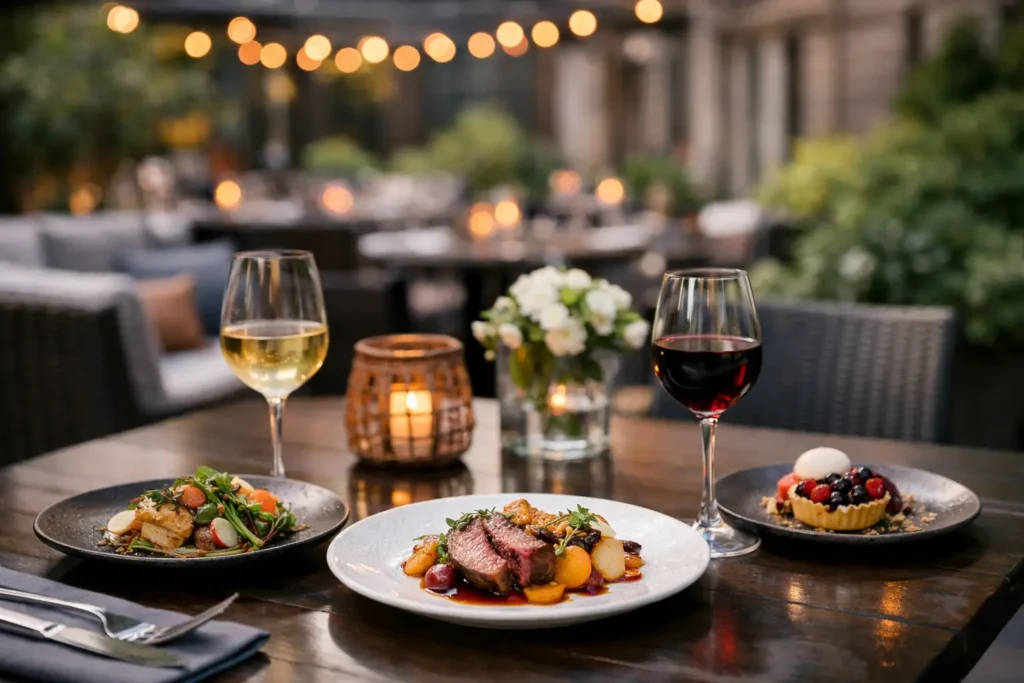
A seasonal tasting menu is not simply dinner with more courses. It is a carefully paced evening where the first chilled bite, the final spoonful of dessert, and every pour in between are designed to belong together. This guide to seasonal tasting menus will help you arrive ready to enjoy the experience with confidence, whether you are planning an intimate date night, entertaining a client, or gathering a table of friends for an occasion worth dressing up for.
What Makes a Tasting Menu Seasonal
A tasting menu gives the kitchen room to tell a more complete story than an à la carte order can. Rather than selecting one entrée and one side, guests move through a sequence of smaller courses shaped by the chef’s point of view. The menu may begin with something bright and delicate, build toward richer savory dishes, then finish with a dessert that brings the evening into focus.
Seasonality makes that progression feel alive. In spring, the plate might lean toward tender greens, peas, herbs, shellfish, and crisp acid. Summer calls for ripe tomatoes, sweet corn, stone fruit, and lighter preparations that suit a lingering evening on the patio. Autumn brings depth through mushrooms, squash, apples, and warm spice, while winter offers the comfort of slow-cooked meats, root vegetables, rich sauces, and cellar-worthy reds.
The value is not novelty for its own sake. Cooking with ingredients at their peak gives a chef better flavor, better texture, and more room for contrast. A seasonal menu also gives regular guests a reason to return. The room may have the same polished glow, the martinis may still arrive dazzling and cold, but the meal has a distinct sense of time and place.
How to Read a Seasonal Tasting Menu
The best way to approach a tasting menu is to read it as a progression, not a checklist. Notice the ingredients that repeat or evolve across courses. A citrus note in an opening crudo may return later in a sauce. A smoky element might begin subtly and become more pronounced beside the main course. Those details reveal the chef’s intended rhythm.
Course count matters, but it does not tell the whole story. Five courses can be generous when the menu includes bread, amuses, palate cleansers, and thoughtful petits fours. Eight courses can feel restrained if the kitchen is working in very small, precise portions. Ask your server about the overall pacing if you are dining before a show, fitting dinner around a business schedule, or hoping to settle into a longer night of cocktails and conversation.
It is also wise to look beyond the ingredients you recognize. A tasting menu is often where a kitchen shows its most expressive work, including unfamiliar fish, heirloom produce, regional cheeses, or classical techniques used in a fresh way. Curiosity is part of the occasion. That said, a menu should never require guesswork around allergies or dietary restrictions.
Share dietary needs when reserving
Give the restaurant advance notice of allergies, intolerances, and dietary preferences. A serious allergy requires more than a quick mention when the first course arrives. With notice, the culinary team can determine whether a substitution is possible while preserving the integrity of the experience.
Not every adjustment can be accommodated on every menu. A tightly composed seasonal tasting menu may rely on a sauce, stock, or preparation that cannot be changed at the last minute. Clear communication protects both the guest and the kitchen, and it usually leads to a much more enjoyable evening.
Choosing the Right Occasion
A seasonal tasting menu excels when dinner itself is the event. It brings structure to a date night, turns a birthday into a proper celebration, and gives a client dinner a level of care that a rushed reservation cannot match. For groups, it can also remove the friction of multiple menu decisions and keep the table moving together.
There are trade-offs. If your group wants to arrive at different times, order casually, and make plans course by course, à la carte dining may fit better. The same is true when guests have widely varying appetites or want maximum flexibility. A tasting menu rewards a shared commitment to the evening’s pace.
For Financial District diners, timing deserves special attention. A tasting menu can be an elegant transition from a polished workday into a more social night, but allow enough time to enjoy it. Arriving a few minutes early, especially for a first drink at the bar, changes the mood immediately. You are not squeezing in dinner. You are giving the evening its due.
Wine Pairings, Cocktails, and the Pace of the Table
Wine pairings are one of the most rewarding ways to experience a seasonal menu because they reveal flavors that may otherwise stay in the background. A mineral-driven white can make shellfish taste sweeter. A restrained red may bring out the earthiness of mushrooms without overwhelming a delicate sauce. With dessert, a thoughtfully chosen pour can echo spice, fruit, or bittersweet chocolate while keeping the finish balanced.
A pairing is not mandatory. Guests who prefer one special bottle can choose a wine with enough versatility to carry through several courses, often with help from the sommelier or service team. Champagne and other sparkling wines are especially flexible, moving comfortably from a first bite through richer dishes. A bright white can work beautifully for a seafood-led menu, while a structured red may be the right choice when the meal centers on roasted meats and autumnal flavors.
Cocktails can have a place, too, particularly before dinner or after the final course. A designer martini, a spirit-forward classic, or a seasonal drink with fresh citrus and herbs sets an indulgent opening note. During the menu itself, however, cocktail flavors can compete with subtle courses. One excellent aperitif followed by wine, or a carefully selected nonalcoholic pairing, often creates the most balanced experience.
Ask for guidance, not just recommendations
The most useful question is not, “What is your best wine?” Instead, share how you like to drink. Tell the team if you prefer brighter whites, generous reds, dry sparkling wine, lower-alcohol options, or a bottle that feels celebratory without becoming too heavy. A good recommendation should fit your palate, the menu, and the tone of the night.
The Details That Make the Evening Feel Effortless
A refined meal still benefits from a little planning. Confirm the reservation, let the restaurant know if you are celebrating, and be realistic about your arrival time. If you are hosting clients or a larger group, communicate any schedule requirements in advance rather than trying to accelerate the menu mid-service.
Dress for the setting and for your own comfort. Seasonal tasting menus often invite a more polished approach, especially in a restaurant where leather seating, low light, and a serious wine program set the stage. There is no need to be overly formal, but this is a fine moment for the outfit that makes you feel composed.
At the table, put the phone away when possible. Photographing a memorable course is understandable, but the greater pleasure is in the details that do not translate to a screen: the aroma rising from a warm plate, the contrast of a chilled wine against a rich sauce, the conversation that gets better as the evening unfolds.
A Guide to Seasonal Tasting Menus for Groups
For celebrations and business entertaining, a tasting menu can be an exceptionally polished choice. Everyone receives a shared culinary experience, service has a clear cadence, and the host is spared the pressure of managing individual orders all evening. It is especially effective for guests who appreciate good food but may not know one another well, since each course gives the table something immediate to discuss.
The key is to set expectations. Let guests know the format, approximate duration, price range, and beverage plan before the evening. If the dinner includes wine pairings, say so. If cocktails are planned afterward, build that into the invitation. This kind of clarity feels considerate, never stiff.
At Vintage Restaurant & Lounge Boston, a seasonal menu can be the centerpiece of a dinner that extends naturally into an outstanding wine selection, late-night drinks, or a private gathering with more to celebrate. The atmosphere matters as much as the menu: a great course tastes even better when it arrives at a table that feels made for the moment.
Choose a seasonal tasting menu when you want the meal to carry the memory. Come with an appetite, a little time, and the willingness to let a chef lead. The most memorable evenings are rarely rushed, and the best courses have a way of making the rest of the night feel beautifully inevitable.