
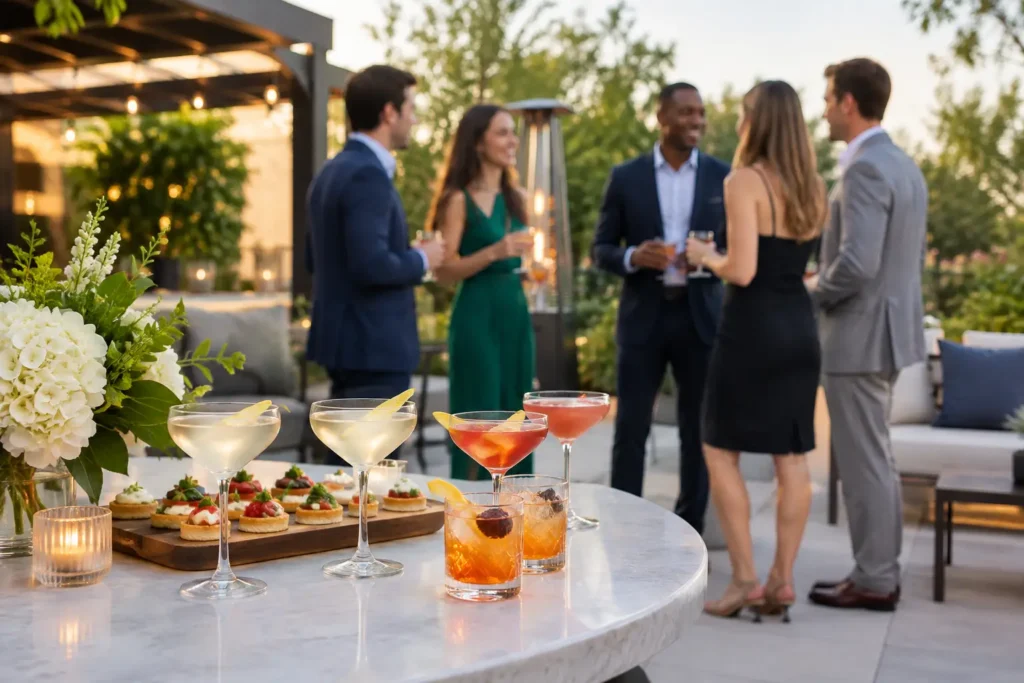
A cocktail reception succeeds or fails in the first 20 minutes. Guests arrive from the office, from the train, or from a full day of meetings, and they immediately read the room: Is there a welcoming drink? Is there space to settle in? Does the energy feel considered? Knowing how to organize a cocktail reception means designing that first impression, then carrying it through the final toast.
This is not a seated dinner with a few drinks before the meal. A reception is a social occasion built around movement, conversation, and a steady rhythm of exceptional cocktails and easy-to-enjoy food. The goal is polished but never stiff – an experience that feels effortless to guests because every important detail has been anticipated.
Start With the Occasion and the Guest List
Before selecting a martini or passing a single canapé, define what the reception is meant to accomplish. A client-facing event calls for enough quiet corners to have meaningful conversations. An anniversary celebration may want more sparkle, more music, and a late-night transition. A team gathering after a major milestone should feel warm, social, and genuinely rewarding rather than obligatory.
Your guest count shapes every decision that follows. For a two-hour reception, plan for a format that allows people to circulate without feeling crowded or stranded at the edge of the room. A guest list of 30 may feel best in an intimate private space with lounge seating. At 75 or more, a larger room, multiple food stations, and more than one bar service point can protect the flow of the evening.
Ask guests about dietary needs when they RSVP, especially for a business event. It is far more gracious to have vegetarian, gluten-conscious, and alcohol-free options planned into the menu than to improvise once guests have arrived. The same applies to accessibility: clear paths, comfortable seating, and easy access to restrooms are part of great hospitality.
How to Organize a Cocktail Reception Around Flow
The most memorable receptions have a sense of pace. They do not begin at full volume, and they do not let guests wait too long for their first drink or first bite. Think of the event in moments: arrival, welcome, conversation, a lift in energy, then a relaxed close.
Set the reception for a realistic window. Two hours works beautifully for a post-work mixer or pre-dinner gathering. Three hours gives a celebration room to breathe and allows the menu to develop from lighter passed bites to more substantial fare. If the event runs longer, guests will expect a more generous food offering and a stronger shift in atmosphere as the night progresses.
At arrival, give guests an immediate point of orientation. A host should welcome them, check them in with discretion if needed, and direct them toward a signature drink, wine, or zero-proof option. Avoid placing a bar directly in the entry path if it creates a line at the door. The first few guests should have a reason to move farther into the space, making room for those behind them.
Conversation needs both energy and relief. High-top tables encourage mingling, while a limited number of lounge seats gives guests a place to pause. For professional groups, this balance matters. People want to network without spending the evening balancing a plate, a drink, and a coat while searching for somewhere to stand.
Music should support the room rather than compete with it. Early in the reception, keep the volume low enough for introductions and business conversation. It can rise modestly as the event loosens up, particularly if the guest list is social or celebratory. A playlist with a clear personality is better than generic background noise, but it should still leave the room feeling open to talk.
Build a Drinks Menu With Intention
An outstanding cocktail reception does not require an endless drinks list. It needs range, quality, and quick service. Choose one or two signature cocktails that match the season or the spirit of the occasion, then complement them with a few familiar classics, a thoughtful wine selection, beer, and a zero-proof drink that feels just as composed as everything else.
A signature cocktail creates a natural talking point and helps control ordering at the bar. For a fall business reception, that might mean a bourbon cocktail with citrus and subtle spice. For a summer celebration, a bright gin, vodka, or sparkling wine cocktail can set a lighter mood. The trade-off is speed: highly customized drinks can slow service. Keep signature selections elegant but practical to build at volume.
Wine deserves the same care as the cocktail program. Offer a crisp white, a versatile red, and bubbles when the occasion calls for them. For a reception focused on client entertainment, a curated wine list sends a quiet but meaningful message about attention to detail. At Vintage Restaurant & Lounge Boston, that sensibility extends from designer martinis to a Wine Spectator-recognized wine program – the kind of range that gives hosts confidence when guests have different tastes.
Plan consumption responsibly. The right amount depends on the event length, guest profile, and whether food is substantial, but hosts should never assume every guest drinks the same way. Make water visible and abundant from the start. A polished alcohol-free option also allows anyone pacing themselves, driving, or skipping alcohol to participate fully in the experience.
Serve Food That Keeps Guests Engaged
Reception food should be delicious enough to remember and simple enough to eat while standing. This is where many otherwise beautiful events lose momentum. Oversized plates, messy sauces, and dishes that require a knife can make guests feel awkward instead of cared for.
For a two-hour cocktail reception, begin with lighter passed bites and add more filling selections as guests settle in. A well-composed menu usually balances a few familiar favorites with more distinctive chef-driven options. Think rich and crisp, warm and cool, meat and seafood, plus vegetarian choices that feel intentional rather than like an afterthought.
If your reception overlaps with dinner hours, plan enough substantial food to meet guests where they are. People arriving directly from work may be hungry, and a few tiny bites will not carry the evening. Consider adding tapas-style plates or a station with a composed, satisfying offering. This gives the event a sense of abundance without turning it into a formal dinner.
Timing matters as much as menu selection. Do not release every item at once. Passing food in waves keeps the room active and gives guests new reasons to linger. Save one especially memorable bite for the middle or later portion of the event, when attention can dip. A final sweet finish can signal that the evening is moving toward its close without abruptly ending the mood.
Design the Room for Easy Conversation
A sophisticated room does not need excessive décor. It needs a point of view. Lighting, glassware, florals, linens, and seating should feel connected to the occasion and the venue rather than assembled from a checklist.
Warm, flattering light is essential. Guests should be able to see one another, photograph the occasion if they wish, and read the room without feeling exposed under harsh overhead fixtures. Candlelight, table lamps, and carefully placed accent lighting create intimacy, while polished barware and fresh garnishes add visual appeal where guests naturally gather.
Keep centerpieces low or place them strategically so they do not interrupt sight lines. If branding is part of a corporate reception, use it with restraint. A beautifully printed cocktail menu, a subtle color story, or a tasteful welcome sign can feel far more elevated than a room crowded with logos.
The room layout should account for service routes, too. Servers need clear lanes to circulate with trays, and bartenders need enough room to work efficiently. A space can look dramatic on paper yet feel frustrating if every guest must squeeze past the same bottleneck to reach the bar.
Give Your Team a Clear Service Plan
Behind a relaxed reception is a team that knows exactly what is happening next. Confirm the run of show before guests arrive: when doors open, when passed appetizers begin, when any welcome remarks occur, and when the final food or drink service will be offered.
If there is a host, executive, or guest of honor speaking, keep remarks brief and schedule them before the room becomes too lively. Have the bar pause blender-like noise or tray service for a moment if needed. Small operational decisions make a large difference in how polished the event feels.
Assign one point person who can make decisions during the reception. This person should know the guest count, dietary requirements, timeline, billing arrangements, and who to contact if something changes. Event hosts deserve to enjoy their guests, not spend the evening answering questions about where to place an extra table.
A well-organized cocktail reception feels generous, not overproduced. Give guests a beautiful first drink, food that arrives at just the right moment, and a setting that invites them to stay for one more conversation. When hospitality has that kind of rhythm, the occasion lingers long after the glasses are cleared.