
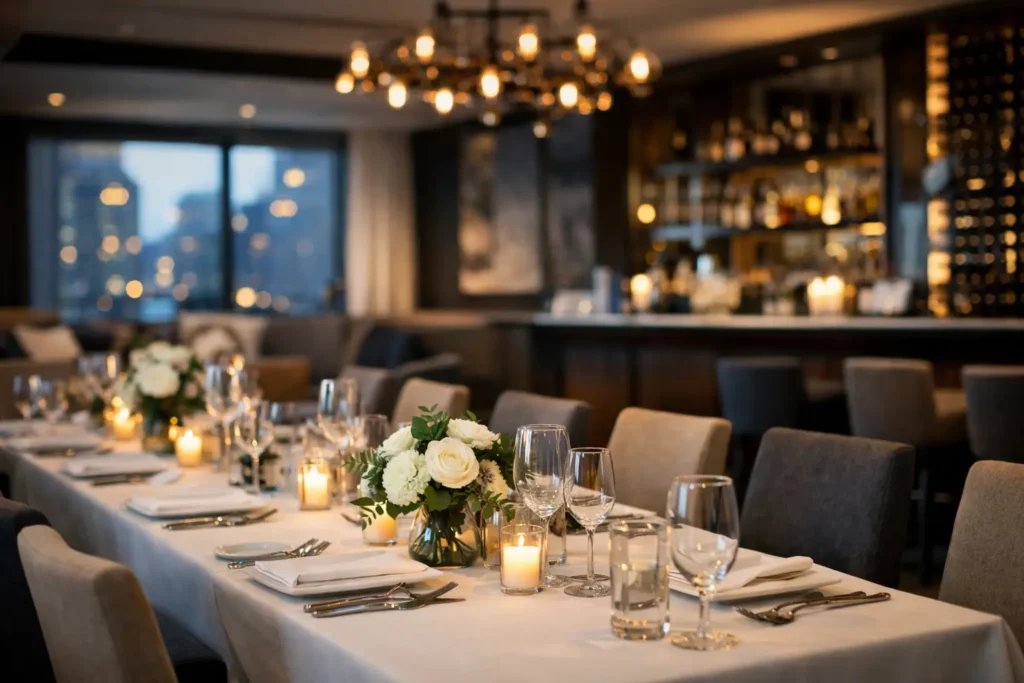
The difference between an ordinary group dinner and a memorable event usually comes down to the room itself. When you’re searching for a private event venue Boston restaurant guests will actually enjoy, the food matters, but so do the lighting, the flow of the space, the service style, and whether the setting feels polished enough for the occasion. In Boston, especially in the Financial District, the best event spaces do more than seat a group. They create a mood.
What makes a private event venue Boston restaurant worth booking
A private dining event should feel elevated from the moment guests arrive. That starts with location. For business hosts, planners, and social organizers, convenience is not a small detail. A venue in a central neighborhood makes attendance easier, keeps the evening on schedule, and helps the event feel intentional rather than complicated.
The next factor is atmosphere. A restaurant venue has a natural advantage over a generic function room because it already knows how to host people beautifully. Rich interiors, flattering lighting, a lively but controlled energy, and a layout that supports conversation all shape the guest experience before the first course is served.
Then there is the menu. Guests remember what they ate, what they drank, and whether service felt smooth. A chef-driven kitchen, a strong wine list, and a cocktail program with real personality can turn a simple dinner into an occasion. That matters for client entertainment, milestone birthdays, rehearsal dinners, company celebrations, and holiday parties alike.
Why restaurants work so well for private events in Boston
Boston has no shortage of event spaces, but restaurants offer something that standalone venues often can’t. They are built around hospitality. The room, the pacing, the bar program, and the staff are already designed to make people feel taken care of.
For hosts, that means fewer moving parts. You are not trying to bring in outside catering, coordinate rentals, or guess how the evening will feel once guests fill the room. A strong restaurant venue already understands timing, presentation, dietary preferences, and how to transition a gathering from cocktails to dinner to a more social close.
That flexibility is especially attractive in a city where events range from polished corporate dinners to stylish personal celebrations. A restaurant can feel intimate without feeling stiff. It can feel energetic without losing refinement. For many hosts, that balance is exactly the point.
How to choose the right private event venue Boston restaurant for your crowd
The best venue for your event depends on who is in the room and what the evening needs to accomplish. A client dinner has different priorities than a birthday party. A networking reception needs movement and mingling space, while an anniversary dinner calls for a more romantic, composed setting.
Start with guest experience rather than headcount alone. A room might technically fit your group, but if it feels cramped, loud, or disconnected from the restaurant’s best features, the event can fall flat. Capacity should support comfort. Guests should be able to converse easily, move naturally, and enjoy the setting without feeling tucked away as an afterthought.
Food and beverage style also matters more than many planners expect. A seated dinner works well when the event calls for structure and a sense of occasion. Shared plates and tapas-style service can create a more social rhythm, especially for groups that want interaction. A cocktail-forward reception can be perfect for after-work gatherings, but only if the bar program is strong enough to carry that format.
There is also the question of identity. Some venues are functional. Others make a statement. If you are hosting colleagues, clients, or guests whose opinion matters, the space should reflect taste. A restaurant with leather seating, a sophisticated lounge feel, and an outstanding wine and drinks list communicates confidence without trying too hard.
The details guests notice immediately
Hosts often focus on menus and budgets first, but guests tend to notice the sensory details. They notice whether the room feels inviting. They notice whether the lighting is warm or harsh. They notice whether the cocktails feel considered or generic. These details shape the mood long before anyone comments on the entrée.
Service is another make-or-break element. For private events, polished service should feel attentive, not intrusive. Water glasses stay full. Courses arrive on time. The host does not need to chase down staff or solve preventable issues mid-event. The best restaurant venues make everything feel easy, even though a great deal is happening behind the scenes.
Sound is often overlooked, yet it can define the entire night. A private room that feels too quiet can become awkward. One that leaks too much outside noise can derail conversation. The right venue manages energy well. It lets the event feel lively while still allowing people to hear one another across the table.
When a restaurant venue is better than a traditional event space
A traditional venue can make sense for very large events or highly customized productions. But for many gatherings in Boston, a restaurant is the smarter choice because it already delivers what most hosts actually want: exceptional food, beautifully made drinks, a distinctive setting, and service that understands occasion dining.
There are trade-offs, of course. If your event requires extensive staging, a dance floor, or a highly branded environment, a conventional event hall may offer more blank-canvas flexibility. But blank canvases also require more work. If your priority is an evening that feels elegant, social, and expertly hosted, a restaurant setting usually gets you there faster and with better atmosphere.
That is why so many business dinners, holiday events, engagement parties, and celebratory group dinners land in stylish restaurants rather than anonymous banquet rooms. People want an experience. They want the room to have its own personality.
The appeal of a multi-experience venue
Some restaurants are excellent for dinner but limited once the meal ends. Others know how to stretch an evening into something more layered. That distinction matters when you want guests to linger, mingle, or continue the night without relocating.
A venue that combines refined dining with a lounge sensibility has a real advantage. Guests can begin with cocktails, settle into a beautifully paced meal, and then shift naturally into a more relaxed social atmosphere. That kind of progression feels especially right for urban professionals and social groups who do not want the event to end the moment dessert is cleared.
In Boston’s Financial District, this versatility is especially valuable. The area draws corporate hosts, after-work groups, and planners who need a venue that can move comfortably between business and celebration. A space that feels polished enough for clients and stylish enough for late-night drinks offers more than convenience. It gives the event range.
Vintage Restaurant & Lounge Boston stands out in that respect because the experience is not one-note. Fine dining, a chic lounge atmosphere, tapas-style energy, and a strong wine and martini program create the kind of setting that works for both formal entertaining and socially confident celebrations.
What event planners and hosts should ask before booking
Before choosing a venue, ask how the space functions, not just how it photographs. Find out whether the room feels fully private or semi-private. Ask how the menu can be tailored to the group and whether the beverage program can support the tone of the event. A wine-focused dinner, for example, needs a different approach than a cocktail reception.
It is also worth asking how the venue handles pacing. Some groups want a crisp, efficient business dinner. Others want a slower evening with time for speeches, toasts, or casual conversation. The right restaurant should be able to read those needs and plan accordingly.
Lastly, consider whether the venue has the presence your event deserves. For high-value clients, leadership dinners, birthdays with style, or milestone celebrations, the setting should feel memorable without becoming theatrical. Sophistication works best when it feels natural.
A private event should feel like a destination
The strongest private events are not just well organized. They are well felt. Guests remember the glow of the room, the first cocktail, the confidence of the service, and the sense that the evening had been curated rather than assembled.
That is the standard worth holding when you book a private event venue in a Boston restaurant. Choose a space that gives your guests more than a table. Choose one that offers atmosphere, culinary credibility, and a social rhythm that makes people want to stay a little longer.
When the room is right, the dinner becomes more than a reservation. It becomes the kind of night people bring up again later, usually with the same first question: when are we doing that again?