
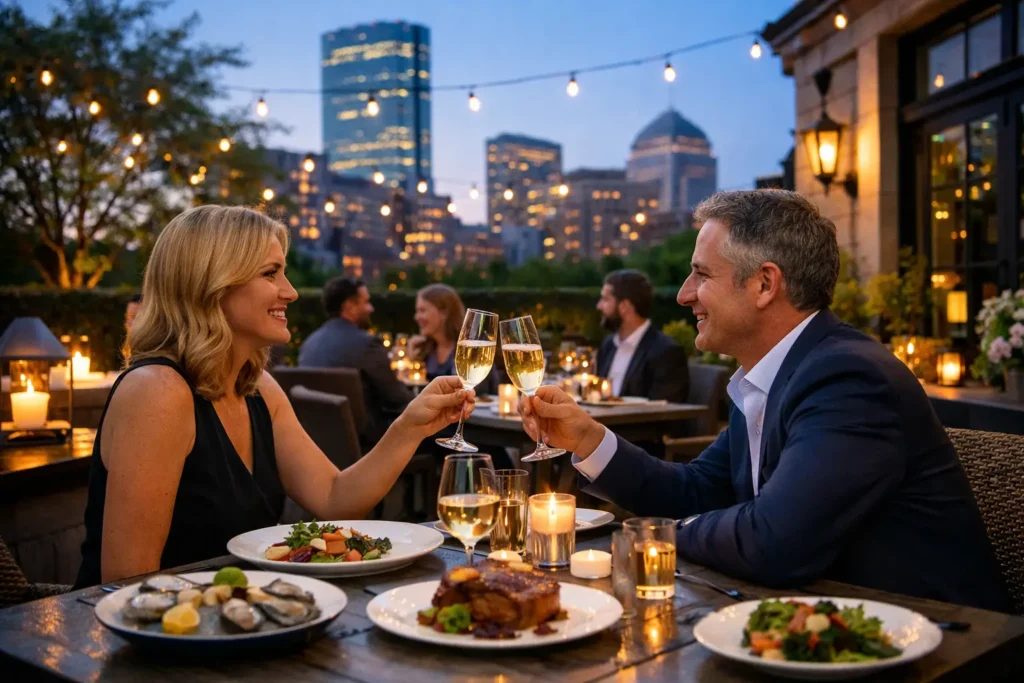
A great dinner begins before the first course reaches the table. It begins with the welcome, the low glow of the room, the weight of a well-made cocktail in hand, and the quiet confidence that every detail has been considered. Fine dining is not simply a more expensive meal. It is an occasion shaped with intention.
For Boston professionals entertaining a client, couples planning a date night, or friends gathering for a milestone, the right restaurant creates space for conversation and celebration. The food matters deeply, of course. So do the wine, service, design, pacing, and feeling you take with you when the evening is over.
Fine Dining Is an Experience, Not a Script
There is no single formula for fine dining. A white tablecloth can signal refinement, but it is not the definition. Neither is a hushed room, a lengthy tasting menu, or a formal dress code. The most compelling restaurants know how to deliver elevated hospitality without making guests feel as though they must perform for the room.
At its best, fine dining brings several elements into focus at once: chef-driven food, thoughtful ingredients, polished service, a distinctive beverage program, and an atmosphere that makes the meal feel separate from an ordinary night out. The details should feel deliberate, not stiff.
That distinction matters. A business dinner may call for privacy, precise timing, and a wine recommendation that suits the table. A Friday evening with friends may call for shareable plates, dazzling martinis, and a lounge energy that carries naturally from dinner into the night. Both occasions can be elevated. They simply ask for a different expression of hospitality.
The Plate Is Only the Beginning
Exceptional cuisine begins with technique, but it should never stop there. A chef’s point of view gives a menu its character: the balance of texture and temperature, the choice to let a pristine ingredient stand on its own, or the confidence to bring unexpected flavors together without losing clarity.
The dishes guests remember are rarely memorable because they are complicated. They are memorable because every component earns its place. A rich entrée benefits from acidity or freshness. A composed seafood dish needs restraint as much as richness. A dessert should feel like a final note, not an afterthought.
Seasonality also changes the experience. In warmer months, a patio table, bright produce, chilled wine, and lighter preparations can make dinner feel relaxed without sacrificing sophistication. In colder months, a leather-clad dining room, a fuller-bodied red, and a beautifully prepared entrée offer their own kind of indulgence. Fine dining should respond to the season and the mood of the city around it.
Service Should Feel Effortless
The highest form of service is attentive without becoming intrusive. It anticipates a need before it becomes a request, yet leaves room for guests to set the pace of their own evening.
That may mean recognizing when a table is in the middle of a meaningful conversation and allowing the moment to breathe. It may mean guiding a guest through an unfamiliar wine list with genuine enthusiasm rather than ceremony. It may mean ensuring a large party receives the same care as an intimate table for two.
Polished service is built on knowledge, timing, and discretion. A server should be able to describe a dish in a way that makes it more appealing, explain a preparation clearly, and offer a pairing that feels personal. But expertise is most convincing when it is delivered with warmth. Guests should leave feeling looked after, not managed.
For corporate hosts and event planners, this reliability is especially valuable. A restaurant can have a beautiful room and an excellent menu, but the evening depends on execution. Clear communication, graceful pacing, dietary awareness, and a team that understands the purpose of the gathering turn a dinner reservation into a successful occasion.
A Great Wine and Drinks List Changes the Evening
Wine is often where a fine dining experience becomes more expressive. The right bottle can soften the formality of a client dinner, make a celebration feel more generous, or give a group something to discuss before the first course arrives.
A serious wine program offers range, not just prestige. There should be familiar labels for guests who know exactly what they enjoy, discoveries for those who want a recommendation, and selections available by the glass that still feel considered. Recognition from a respected wine authority signals care, but the real test is whether guests can find a wine that suits their taste, their meal, and the moment.
The cocktail program deserves equal attention. A classic martini made with precision has a place at an elegant table, as does a creative seasonal drink with a clear point of view. The difference lies in balance. A cocktail should open the evening, complement the food, and look as good as it tastes without becoming a distraction.
This is where a restaurant with both dining room polish and lounge appeal has a distinct advantage. Guests do not have to choose between an excellent dinner and a lively night out. The transition can be part of the plan.
Ambiance Sets the Pace
People remember how a room made them feel. The lighting, music, seating, glassware, and proximity of neighboring tables influence the energy of a meal as much as the menu does.
A refined setting does not need to be silent. It needs to be calibrated. Guests should be able to speak comfortably, enjoy the movement of the room, and feel that the atmosphere supports the occasion. A date night benefits from intimacy. A birthday dinner benefits from a little energy. An after-work gathering benefits from a bar that feels sophisticated rather than transactional.
In Boston’s Financial District, that versatility is particularly appealing. A weekday can move quickly from boardroom conversations to a dinner reservation, then to cocktails with colleagues or friends. Restaurants that understand this rhythm offer more than a table. They offer a destination that meets the evening where it is headed.
At Vintage Restaurant & Lounge Boston, that idea comes to life across an elevated dining room, stylish lounge, tapas-friendly occasions, and seasonal outdoor gatherings. The appeal is not that every visit needs to look the same. It is that every visit can feel considered.
How to Choose the Right Fine Dining Occasion
The best choice depends on why you are going out. For a client dinner, look for a restaurant with confident service, a well-regarded wine list, and a room where conversation can happen without strain. For a celebration, consider the energy after dinner as carefully as the menu. A private or semi-private setting may be worth prioritizing when the guest list is larger or the moment deserves more focus.
For date night, choose a place with atmosphere you can feel immediately. You want a bar worth arriving early for, a menu that invites a little exploration, and a table that makes lingering over dessert feel natural. For a social group, sharing plates and a flexible drinks program can be more valuable than rigid formality.
Reservations also deserve more thought than many guests give them. Let the restaurant know when the evening marks a birthday, anniversary, business milestone, or hosted event. Mention dietary needs early. If wine is central to the dinner, ask for guidance when you arrive rather than choosing in a rush. These small choices help the team shape the experience around your table.
The Luxury Is in Feeling Present
The finest meals do not ask guests to admire every detail out loud. They create enough ease that guests can focus on one another. The room feels right. The food arrives at the right moment. The wine fits the table. The night has a rhythm worth staying for.
Choose the setting that matches your reason for gathering, then give the evening the time it deserves. A memorable dinner is rarely about excess. It is about being fully present for a meal, a conversation, and an occasion that should feel like more than another reservation.