
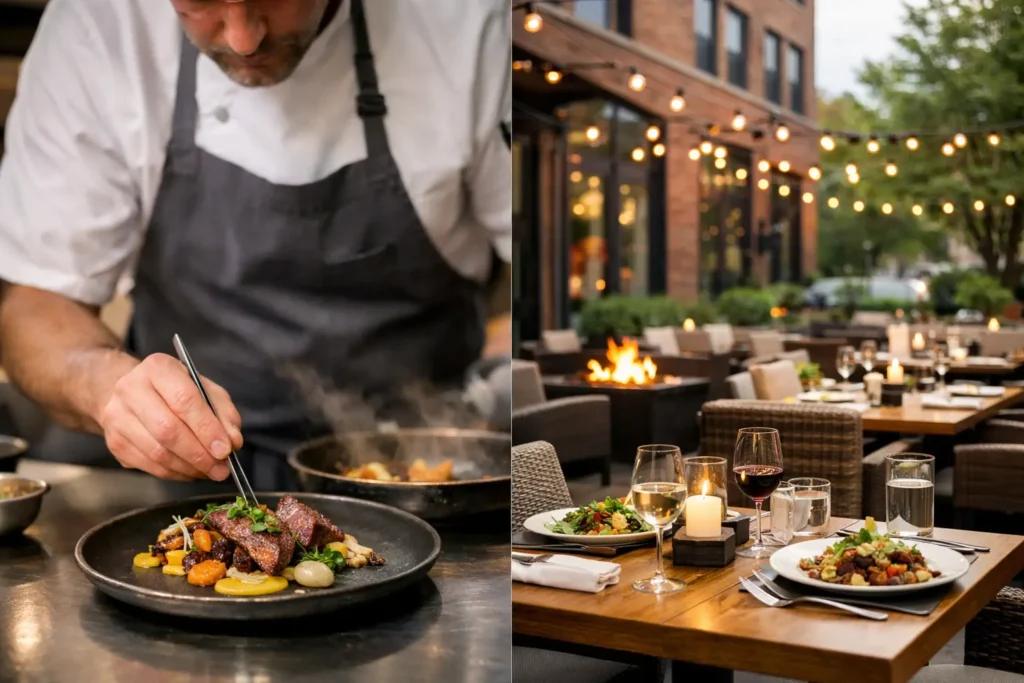
A great night out in the Financial District rarely starts with hunger alone. It starts with intent. Maybe it is a client dinner that needs polish without stiffness. Maybe it is drinks that turn into small plates, then one more bottle, then a table worth lingering at. That is where the appeal of a chef driven restaurant Boston guests seek out becomes clear – the food is not there to simply fill time between cocktails and conversation. It leads the experience.
In a city with no shortage of polished dining rooms, the phrase gets used often. Sometimes too often. A chef-driven restaurant is not just a place with a talented person in a white coat behind the scenes. It is a restaurant where the point of view in the kitchen shapes the menu, the pacing, the mood, and even the kind of night guests end up having.
What a chef driven restaurant in Boston really means
At its best, a chef-driven concept feels intentional from the first course to the final pour. The menu reflects leadership, not committee work. Dishes are built with a clear style, a sense of balance, and an understanding of what guests actually want when they choose an upscale table in Boston.
That matters because Boston diners are discerning. They want quality, yes, but they also want confidence. They want to know that the raw bar, the composed entrée, the late-night bite, and the wine pairing all belong in the same room. In a chef-driven setting, they do.
The difference usually shows up in the details. Sauces have restraint. Small plates feel complete rather than incidental. Proteins are cooked with precision, but they are also presented with some personality. The menu is not trying to impress with excess. It is trying to seduce with judgment.
Why the chef matters beyond the plate
A chef driven restaurant Boston professionals return to regularly does more than produce standout food. It creates trust. When the kitchen has a strong identity, guests feel it before they can necessarily describe it.
That trust is powerful in a business dinner setting. If you are hosting clients or colleagues, you want a room that signals taste and control. You want menu options with range, but not chaos. You want the confidence that seafood will be pristine, steak will arrive exactly as ordered, and vegetarian offerings will feel designed rather than obligatory.
The chef’s influence also affects consistency. A restaurant can have a beautiful interior and a striking bar program, but if the menu feels generic, the night loses altitude. In a chef-led operation, culinary standards tend to anchor the whole property. Service becomes sharper. Beverage pairings make more sense. Guests stay longer because the experience keeps giving them reasons to.
Boston diners want more than a meal
The modern upscale guest is rarely choosing between food and atmosphere. They expect both. That is especially true in downtown Boston, where dinner often overlaps with entertaining, celebrating, networking, or easing into the evening with a round of martinis and a table full of shared plates.
A true chef-driven restaurant understands that context. The menu has to perform in different social settings. A date night calls for elegance and intimacy. A team dinner needs flexibility and a little theater. A private event requires polish at scale. The kitchen has to be disciplined enough for fine dining expectations, but adaptable enough to support a more energetic lounge mood when the room shifts later in the evening.
This is where many restaurants separate themselves. Some are strong on cuisine but feel too narrow for a vibrant night out. Others are excellent for cocktails but treat the food as support staff. The most memorable destinations bring those worlds together.
The menu should feel curated, not crowded
One of the clearest signs of a chef-driven restaurant is menu editing. Not small for the sake of trendiness, and not sprawling just to satisfy every possible preference. Curated.
That means each section has a role. Starters invite the table in. Shared plates make social dining feel stylish rather than messy. Entrées carry enough weight for a formal dinner, while lighter options allow guests to keep the evening moving. Desserts should feel like a choice worth making, not an afterthought.
There is a trade-off here. A tightly focused menu often delivers stronger execution, but it still has to meet the needs of a varied crowd. In Boston, that crowd can include financial district professionals, out-of-town clients, couples, and larger social groups in the same service window. The best chef-driven menus account for that by balancing signature dishes with enough versatility to suit the occasion.
Wine, cocktails, and the kitchen should speak the same language
In an upscale setting, the beverage program cannot feel detached from the food. A chef-driven identity is stronger when the wine list and cocktail menu extend the same sense of taste.
That does not mean every guest needs a formal pairing. It means the restaurant has thought through how a bold red supports a steak, how a bright white sharpens shellfish, how a designer martini works before dinner without overwhelming the palate. The goal is not performance for its own sake. It is cohesion.
This is especially important for guests who are planning an evening, not just a reservation. They want to arrive for drinks, settle into dinner, and continue the night without changing venues or lowering standards. A strong chef and a serious bar team make that progression feel effortless.
Atmosphere still counts – maybe more than ever
For many guests, the phrase chef-driven brings to mind the plate first. But atmosphere is not secondary. In Boston, where dining often doubles as social currency, the room matters.
An elevated restaurant should know how to hold both intimacy and energy. Leather seating, low lighting, a polished dining room, and a lounge that hums rather than shouts – these details matter because they shape how the food is received. Even a beautifully composed dish lands differently in a room with confidence.
That does not mean every chef-driven restaurant has to be hushed or formal. In fact, some of the most compelling ones are designed for range. Lunch can feel efficient and refined. Dinner can feel more indulgent. Late evening can lean social and flirt with nightlife. The challenge is making those transitions feel intentional rather than disjointed.
When done well, that versatility becomes a genuine luxury. Guests do not have to choose between culinary credibility and a memorable scene. They get both.
What to look for when choosing a chef driven restaurant Boston offers
If you are deciding where to book, start by thinking about the kind of night you want. For a business dinner, consistency and service precision may matter most. For a celebration, the room and beverage program might carry equal weight with the menu. For date night, pacing becomes part of the appeal.
Then look for signs of real authorship. Does the menu feel assembled with intention? Are there dishes that suggest a chef’s perspective instead of trend-chasing? Is the wine list serious enough to support dinner, not just drinks? Can the restaurant handle both intimate tables and larger gatherings without losing polish?
A place like Vintage Restaurant & Lounge Boston stands out in this conversation because it understands the full occasion. The kitchen, the wine program, the lounge energy, and the event-ready sophistication all work together. That kind of versatility is not accidental. It is usually the result of strong culinary leadership paired with a clear sense of how guests want to spend their time.
The best chef-driven restaurants earn repeat visits
Anyone can impress once with a striking entrée or a beautiful room. Repeat business is harder. It comes from a restaurant making guests feel that the evening was worth dressing for, worth reserving, and worth recommending.
That is the real standard. A chef-driven restaurant should give you something to remember beyond a single dish. It might be the confidence of hosting there, the pleasure of a perfectly paced dinner, the way the cocktails and small plates carried an after-work meeting into an unexpectedly excellent night, or the feeling that every part of the room knew exactly what it was doing.
Boston has plenty of places to eat. The restaurants people return to for dinner, drinks, and occasions that matter tend to share one trait: the kitchen has a point of view, and the entire experience rises to meet it. When you find that balance, you are not just choosing where to dine. You are choosing the tone for the night ahead.